How the year 2024 is bringing average monthly temperature records into the 21st century
The Royal Netherlands Meteorological Institute (KNMI) publish a dataset of average monthly temperatures recorded at various weather station in the Netherlands since 1901. I took the data for the weather station at De Bilt and grouped it into three buckets - 20th century (years 1901-2000), 21st century (years 2001-2023) and 2024. If you average the monthly averages in each bucket and plot them you’ll see that 21st century is trending warmer than the 20th one1.
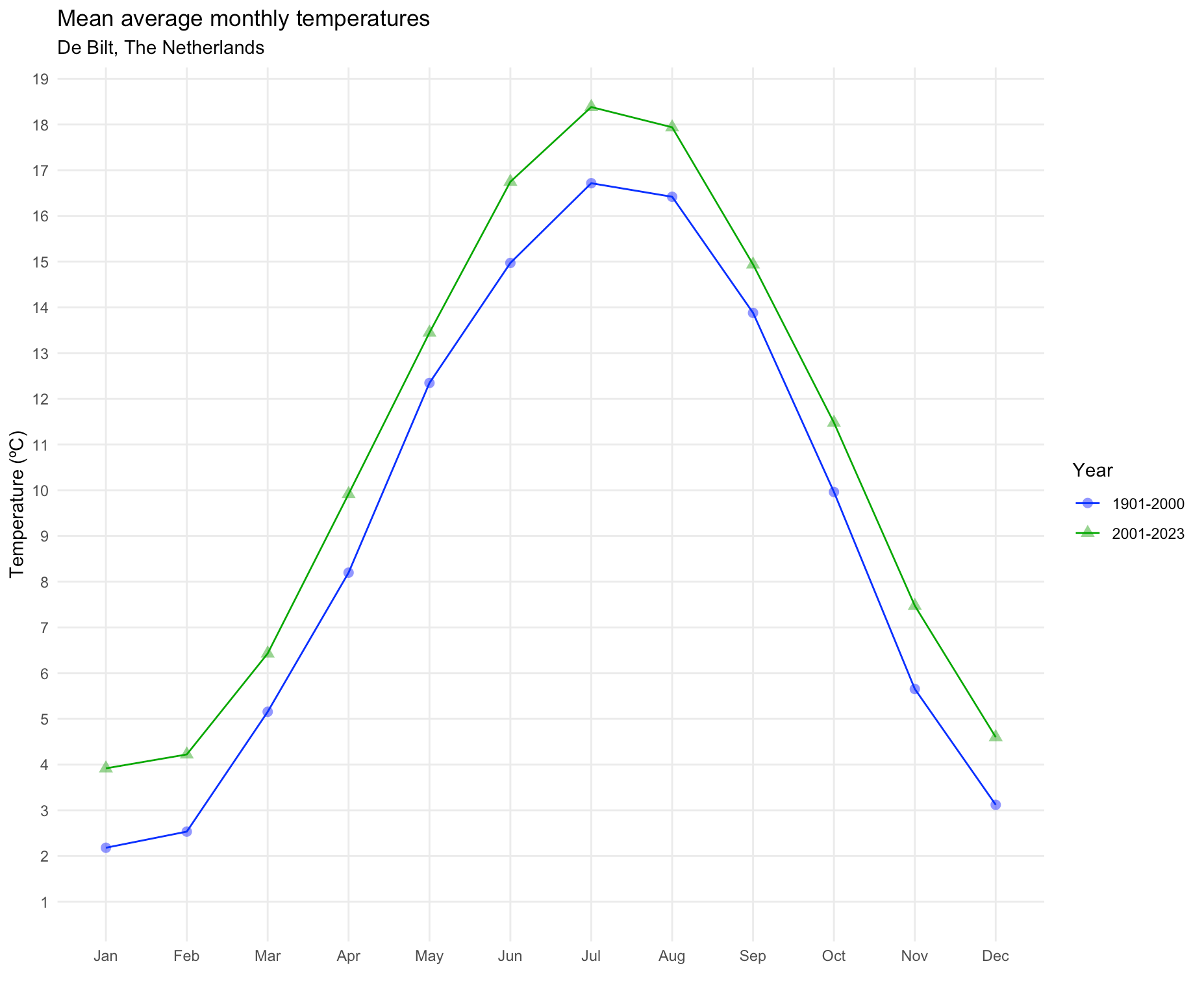
No surprises here I hope! Now let’s overlay the 2024 monthly averages:
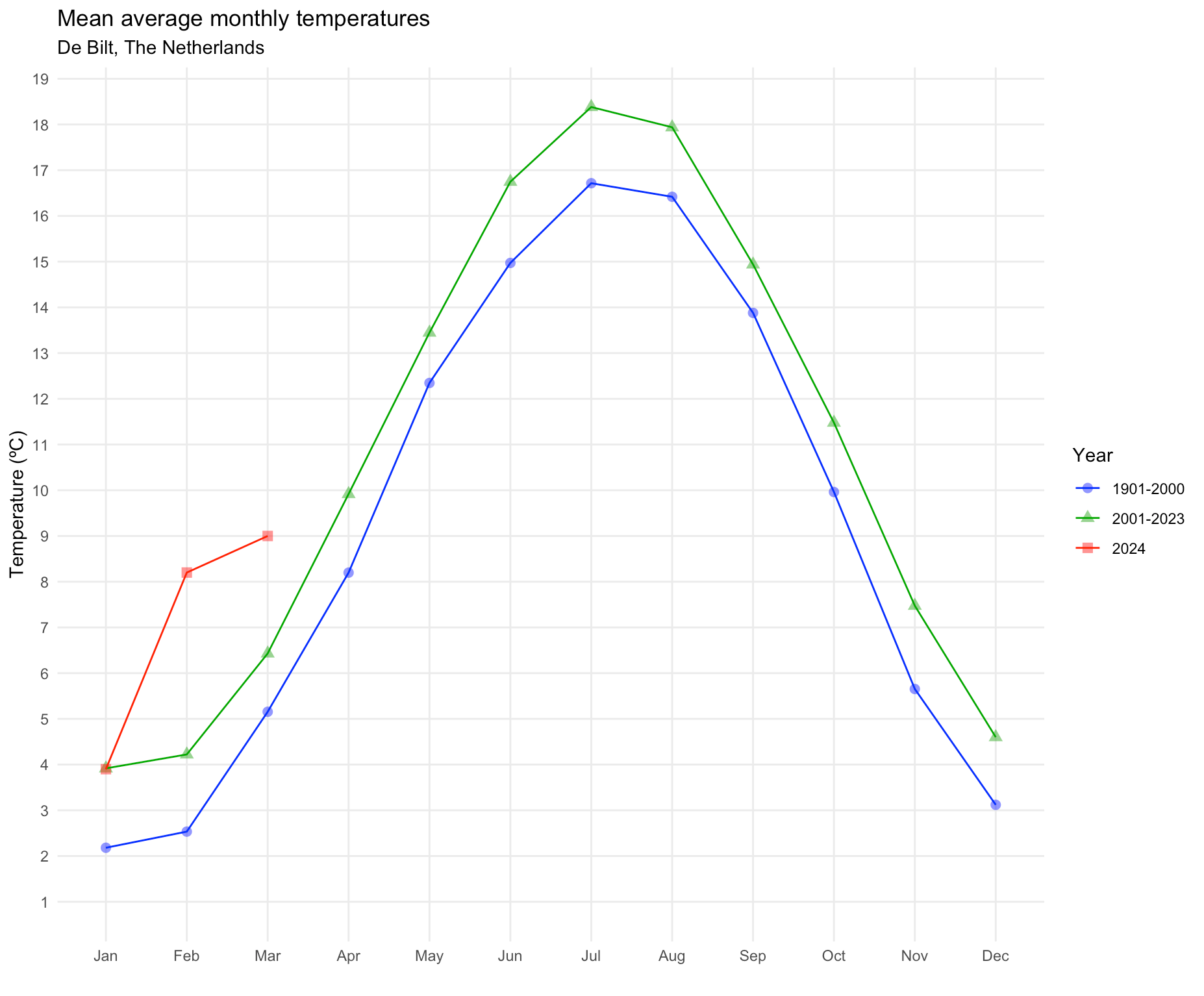
While Jan’24 was your typical January (i.e. typical for 21st century), both Feb’24 and Mar’24 have broken new records. Feb’24 came 5.67ºC above the 20th century average and 3.98ºC above the 21st century average. March 2024 came 3.85ºC and 2.57ºC above the 20th and 21st century averages respectively.
Now let’s change the graph to show the maximum monthly average temperature recorded in 20th and 21st centuries - i.e. the record warmest months in each bucket:
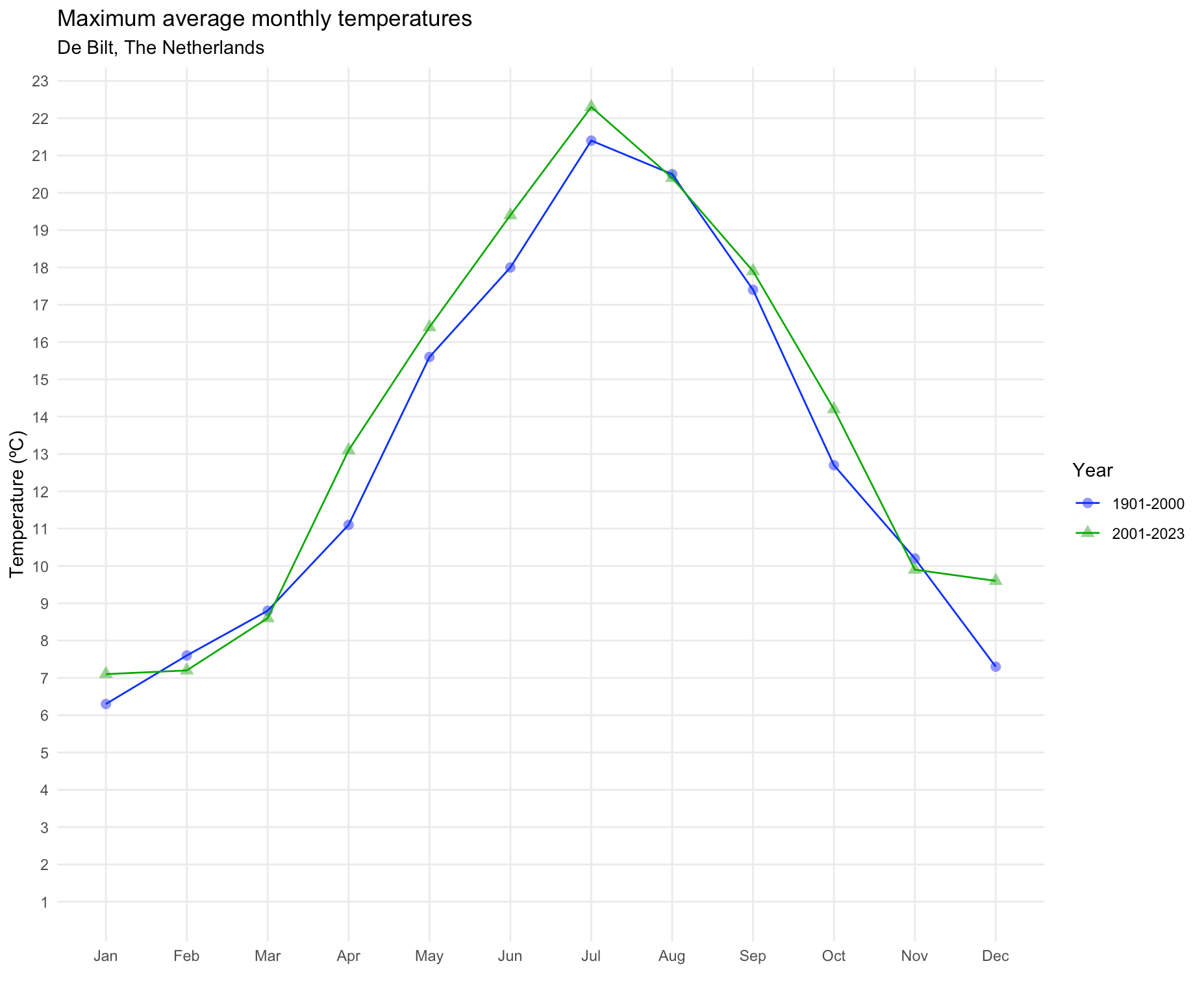 Note how the green line (triangles) is above the blue one (circles) except in a few places.
While most warmest months on record have been in the 21st century, Feb, Mar, Aug and Nov are exceptions. The records for these months were set in the 1990s and so belong to the 20th century. But now let’s throw 2024 monthly averages into the mix:
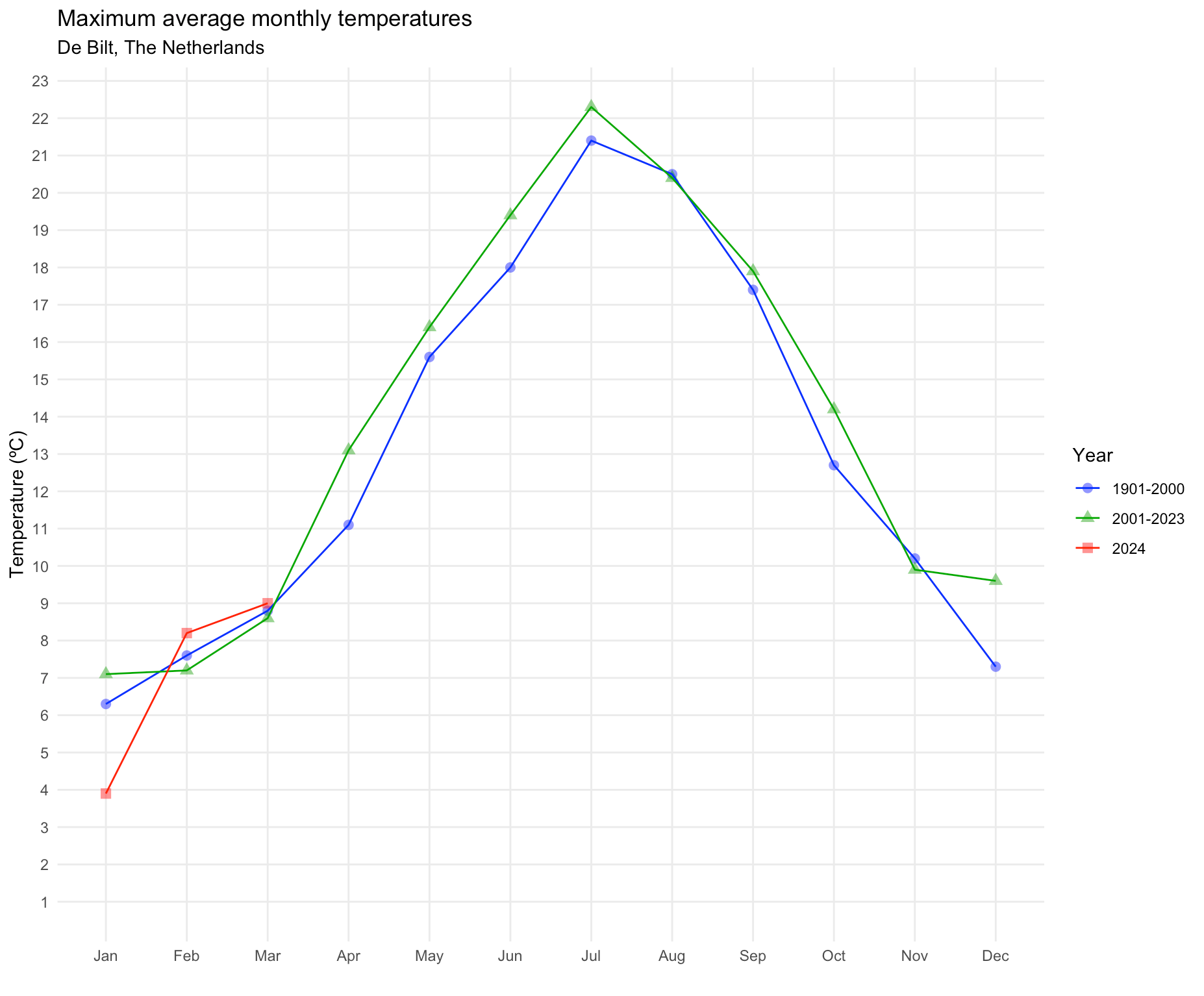
So 2024 has brought the records for Feb and Mar into the 21st century. Will we see the Aug and Nov records broken this year too?
Post prompted by an unusually warm April day in the Netherlands yesterday - the max temperature at De Bilt2 hit 24.1ºC.
Each month is warmer by a different degree. For example, an average Sep is warmer by 1.06ºC, Nov by 1.82ºC. The average of change over the entire 12 month period is 1.53ºC.↩︎
Why De Bilt is used as a reference weather station when talking about the weather in the Netherlands.↩︎
Early Spring
The Netherlands recorded the warmest February on record this year. Here is a boxplot showing the average February temperatures recorded in the Netherlands since 19011.
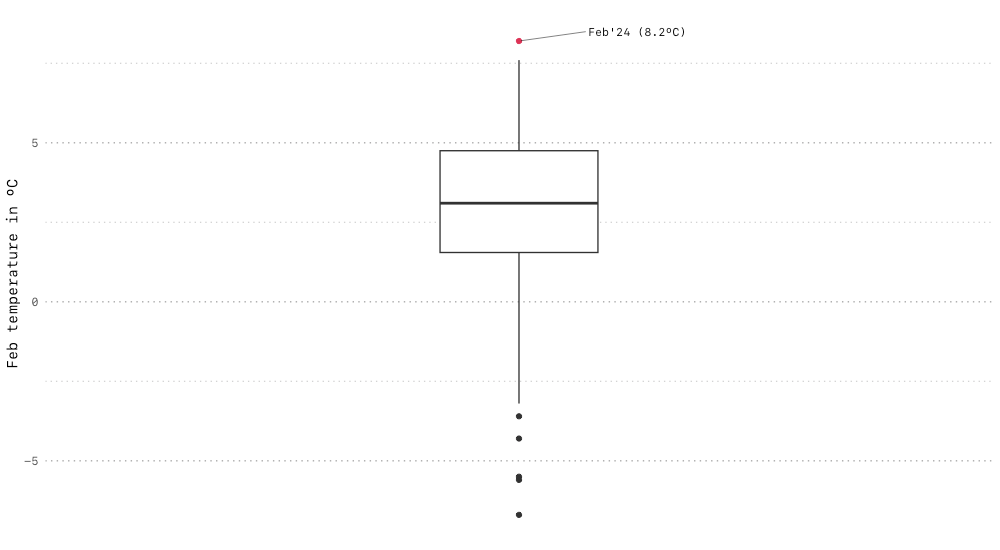
The average temperature this February was 8.2ºC (46.76ºF) - 0.6ºC (1.08ºF) higher than the previous record of 7.6ºC (45.68ºF) from 1990. It has also been extremely wet here for the past few months. Ideal conditions for an early spring2.
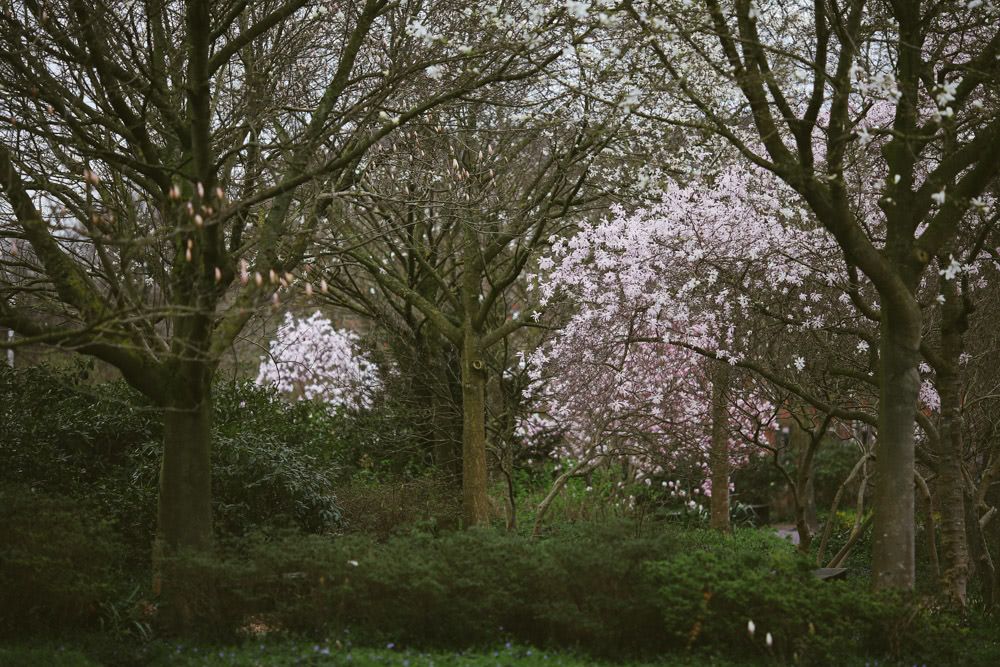
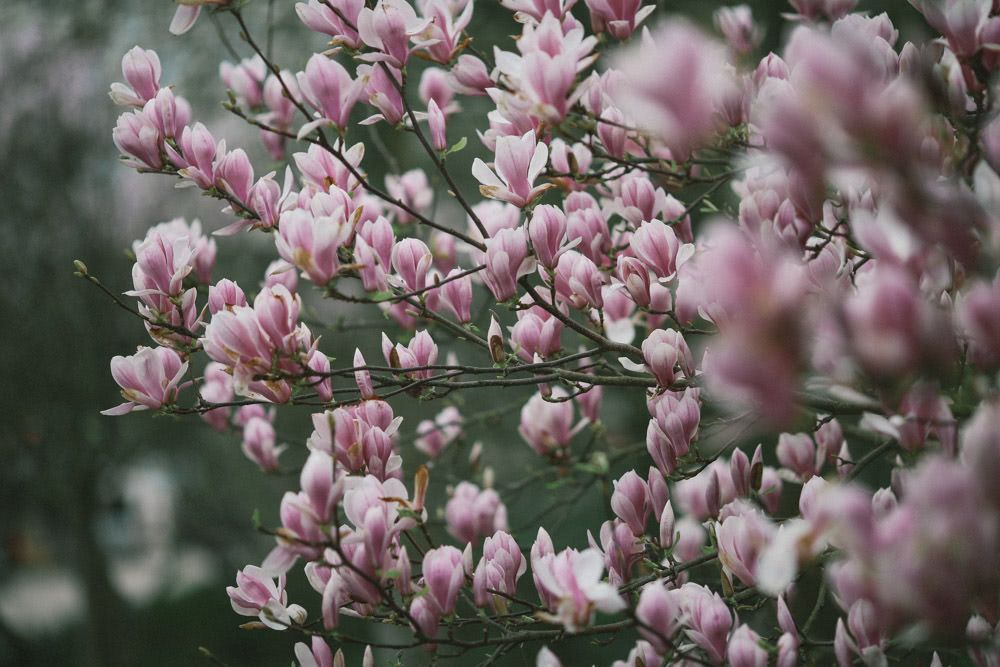
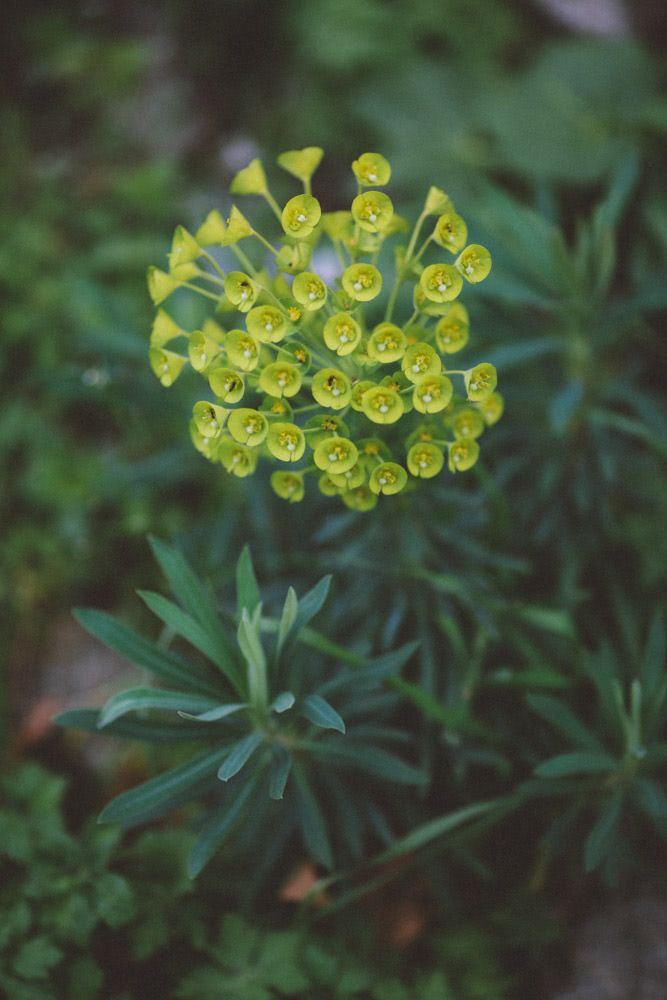
The croci and the narcissi were already blooming by late February, and by middle March the cherry and magnolia trees here had joined the floral choir.
Parakeets are drawn to cherry blossoms like moths to a flame. They sit on the branches and pick at the flowers for hours. Their behaviour looks disturbingly compulsive.
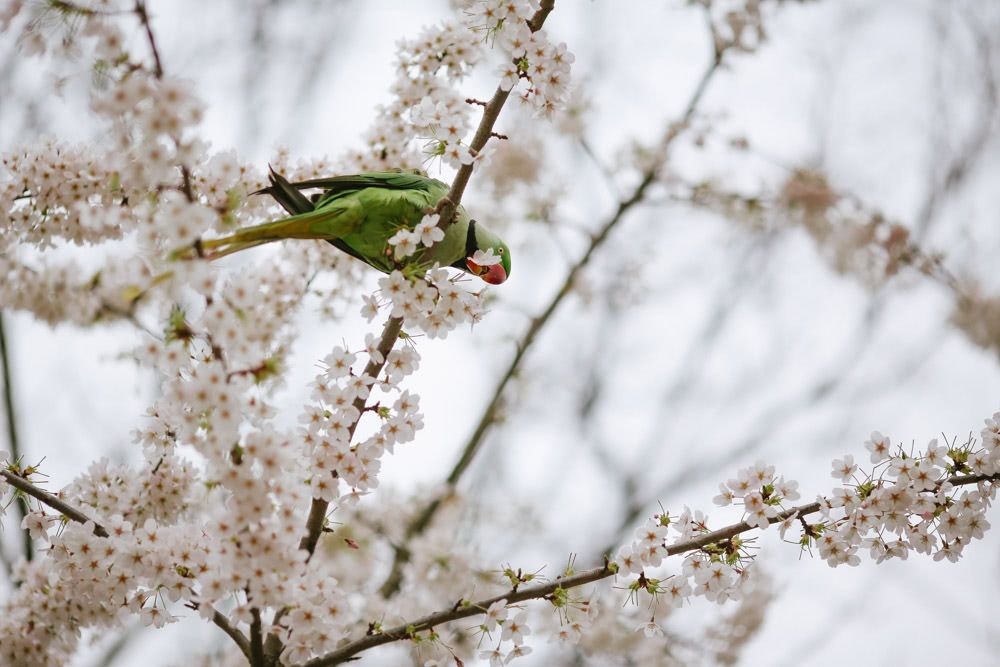
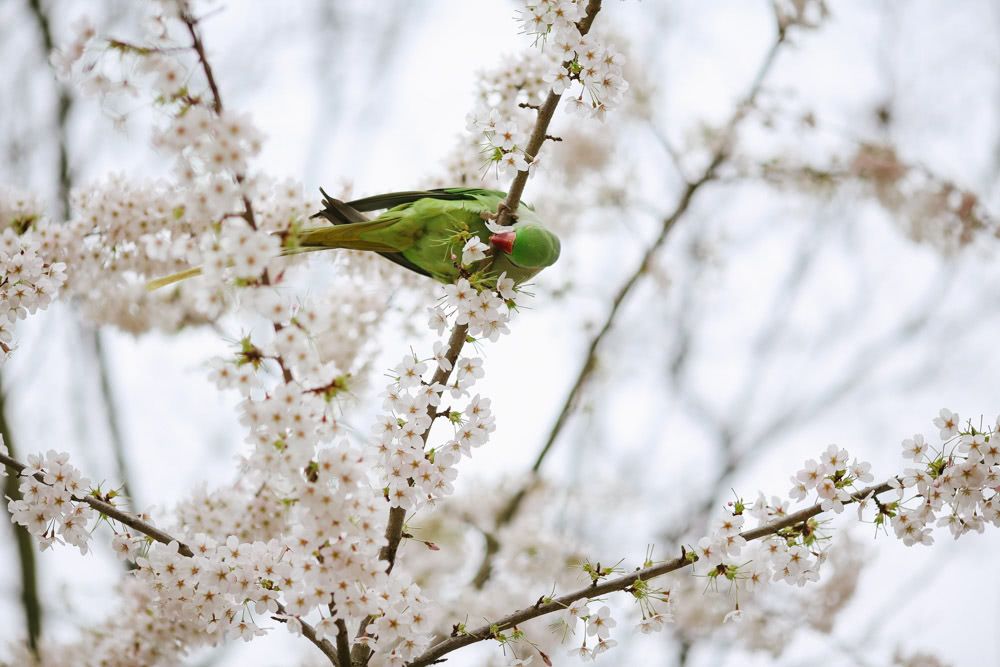
They pluck entire clusters of cherry blossoms at one go, toy with them for barely a second or two and drop them on the ground. Lather, rinse, repeat.
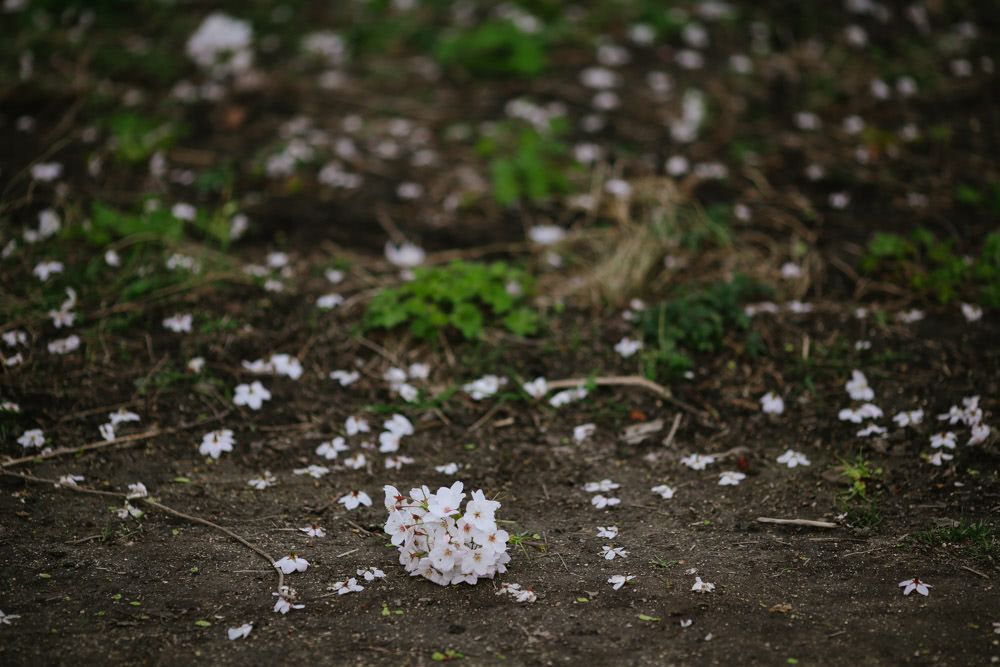
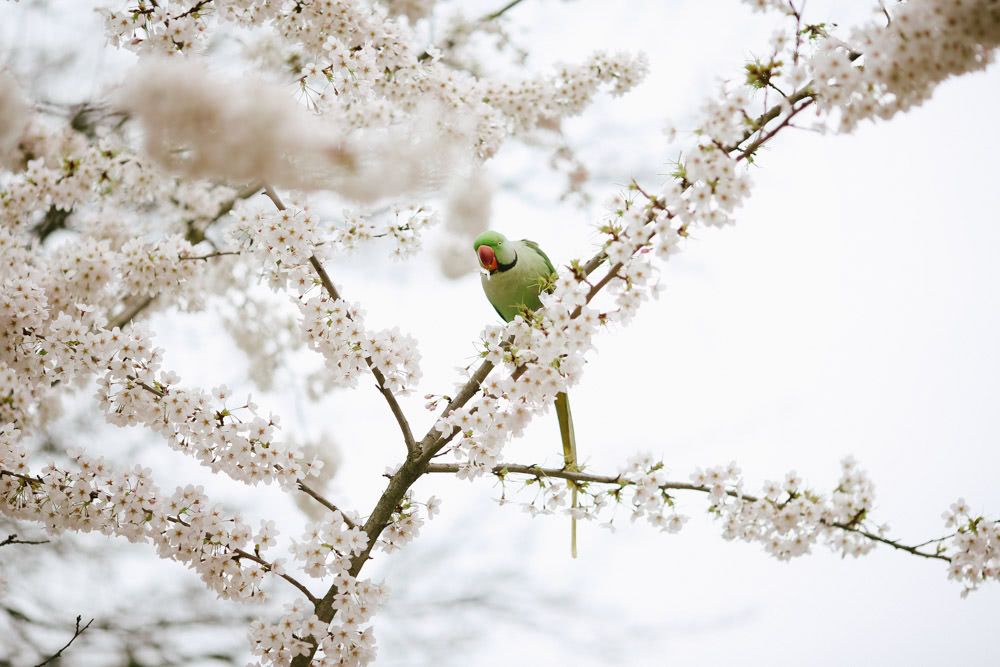
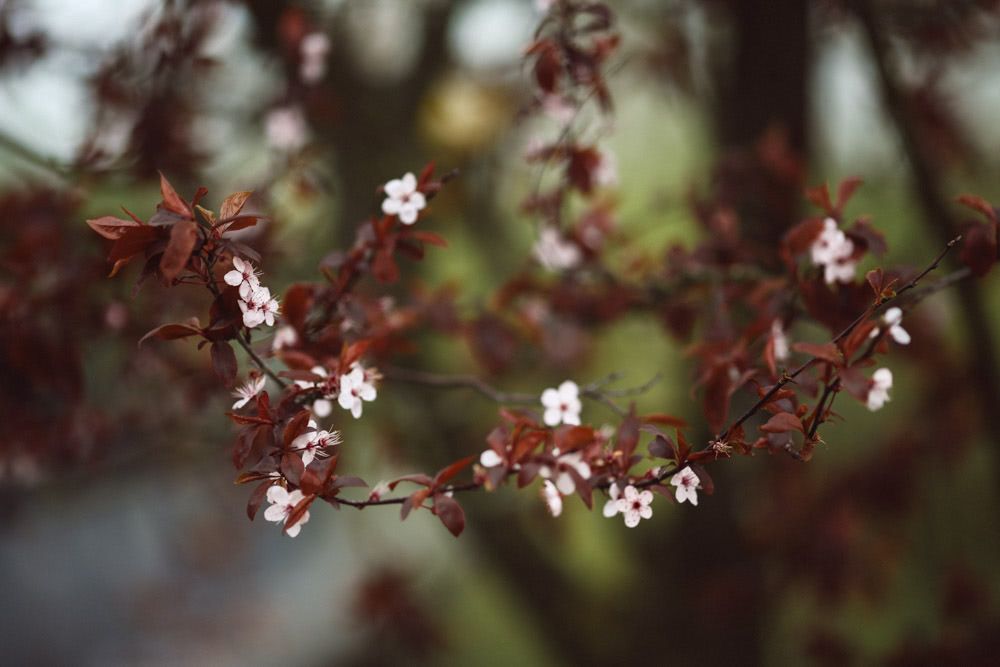
The trees are now sprouting fresh leaves and even though the cherry blossoms won’t be around for more than a couple of weeks (they’ve all but vanished from most parks at the time of this writing), there’ll be plenty other flowering plants and trees that’ll keep the parks and streets in Amsterdam colourful well into June.
Koninklijk Nederlands Meteorologisch Instituut (Royal Netherlands Meteorological Institute) - or KNMI for short - publish monthly average temperatures across 10 weather stations distributed across the country here.↩︎
I guess the Netherlands is not unique in recording an early start to spring. I recently came across this paper, that, through a meticulously assembled dataset spanning centuries, chronicles the progressively earlier start of cherry blossom season in Kyoto, Japan.↩︎
A ferry ride from Lisbon to Barreiro and back
While we had had a rainy start to our day, by the time we walked to the Terreiro do Paço ferry terminal the sun was looking to come out.
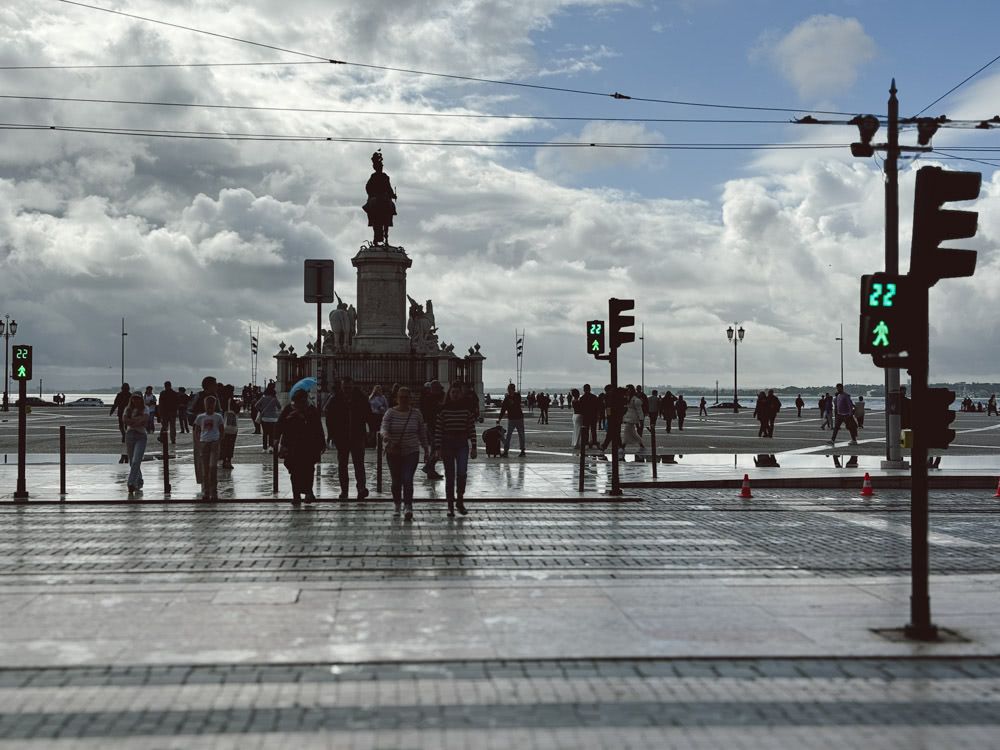
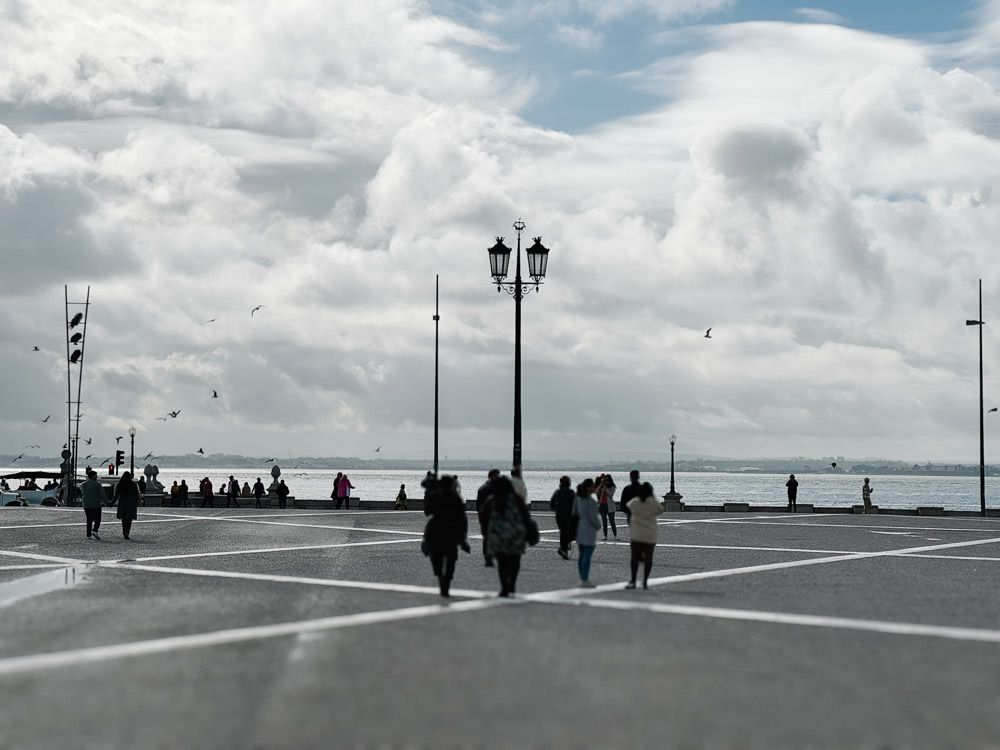
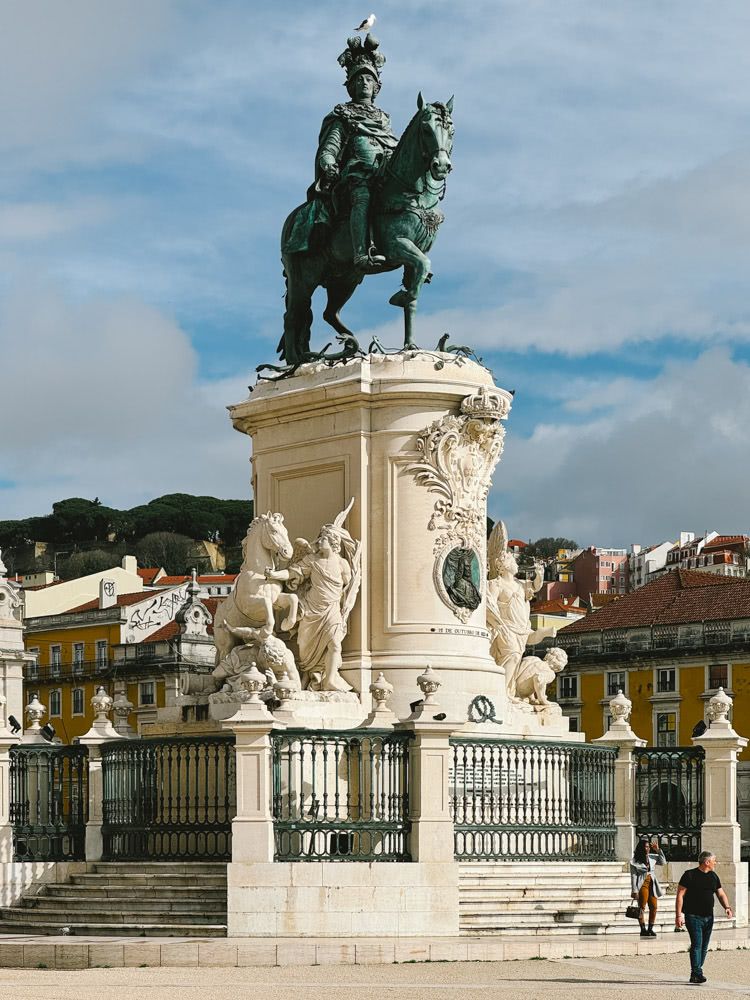
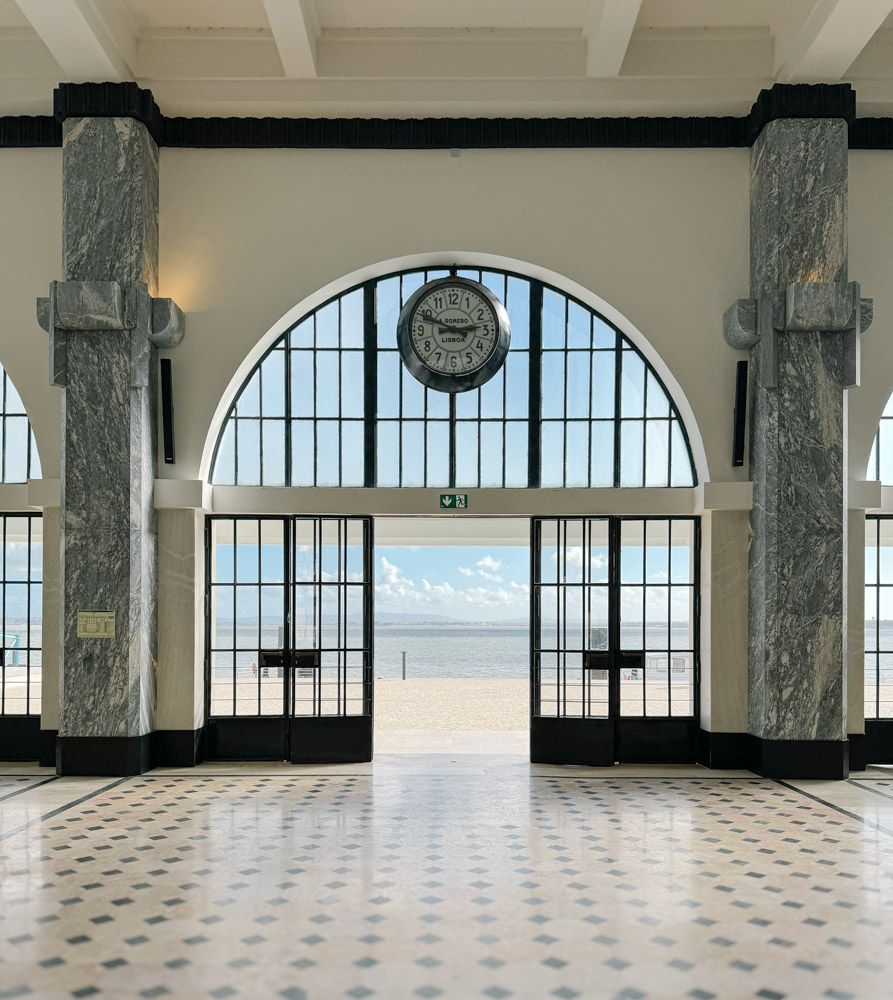
The ferry terminal building looked quite new and a bit bland on the outside - though the facade did seem to have taken some stylistic cues from the Art Deco era. However, it was absolutely regal inside - all columns, marble and granite. The ceiling somehow felt much higher than the exterior had let on. Mosaics of painted tiles depicting coats of arms of various municipalities of Portugal added a splash of colour to the otherwise bare walls.
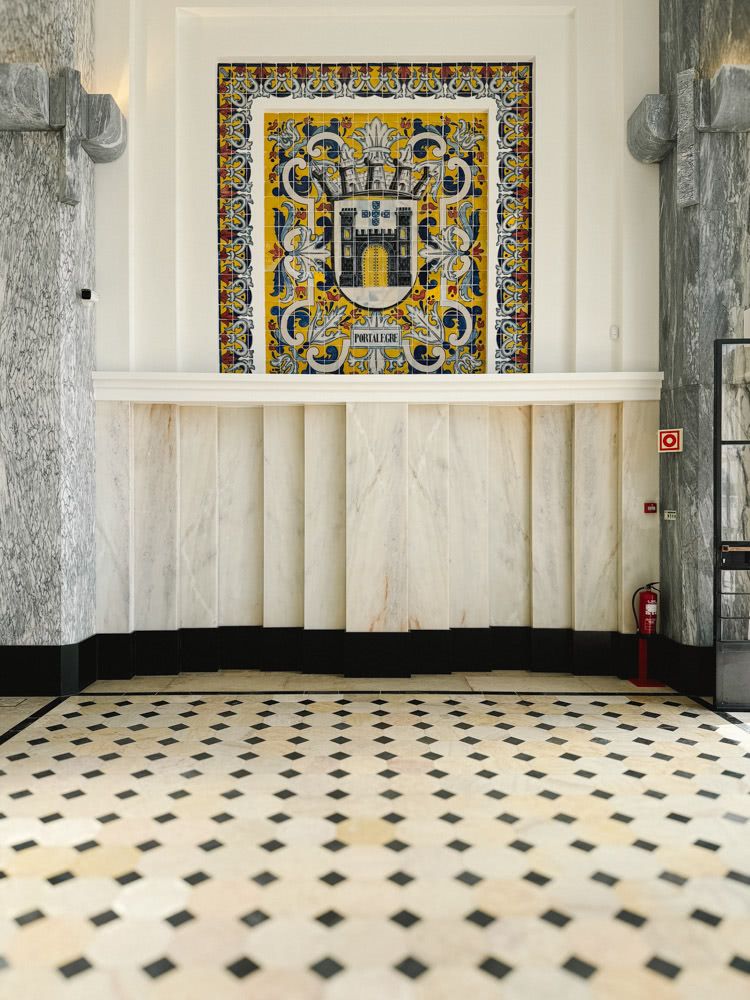
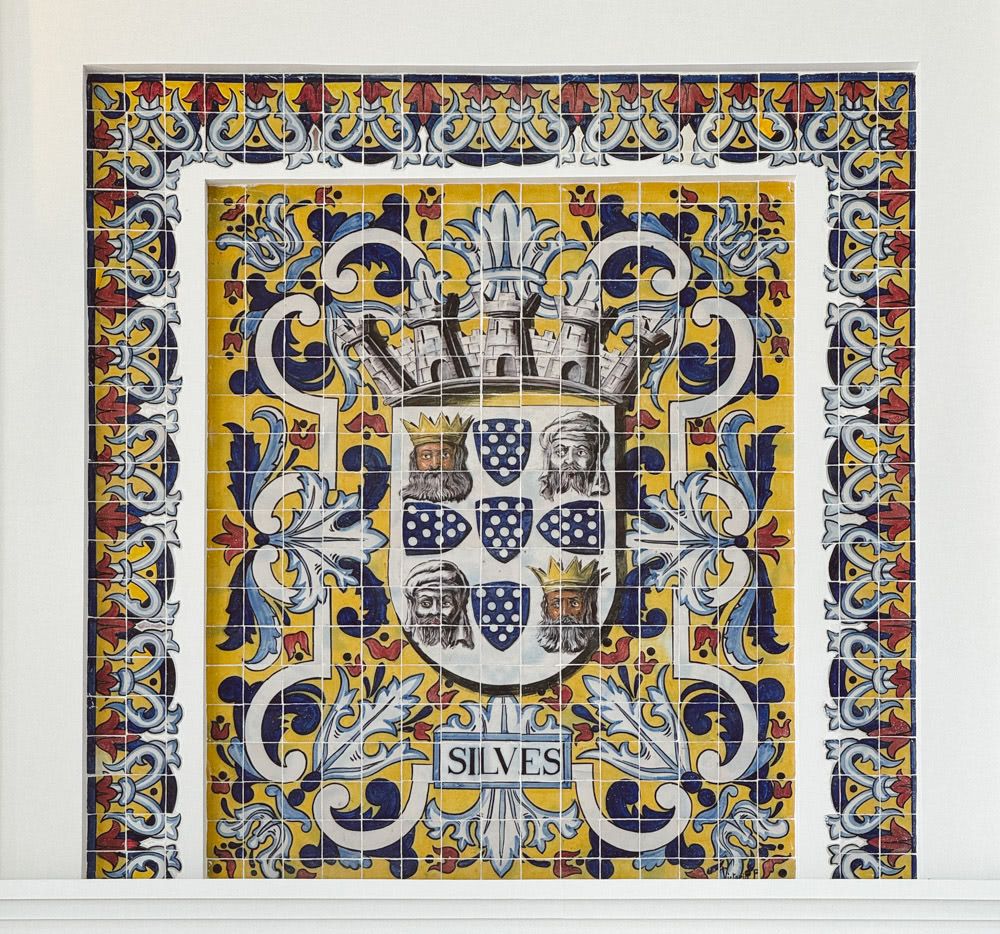
While looking for a place to buy the tickets we found a room in the terminal building with an interactive diorama of Lisbon encased in glass on a large table. There were buttons you could press to illuminate the various bridges and landmarks of Lisbon and even a tide simulator that’d slowly pump water to show you how far the water reaches during the high tide. All very science fair-y and still amusing to us two forty somethings.
We weren’t looking to go anywhere particular in the ferry and settled for the very next one available - a 20-25 minute ride to Barreiro, a small municipality south of Lisbon. The tickets cost a very reasonable € 6.10 per person for a round trip. It wasn’t exactly rush hour so it was easy to score a window seat in the lower deck of the ferry. Just as we were settling in, two guys reeking of sweat and stale beer and arguing loudly in Portuguese sat in the seats behind us. We tolerated them for a couple of minutes but then found different seats - partly because the argument kept becoming more and more raucous but mostly to get away from their collective stench.
Soon our ferry began to move. The ride was fast and smooth1. The windows were tinted and grimy but with enough sun outside I managed to get a photo or two.
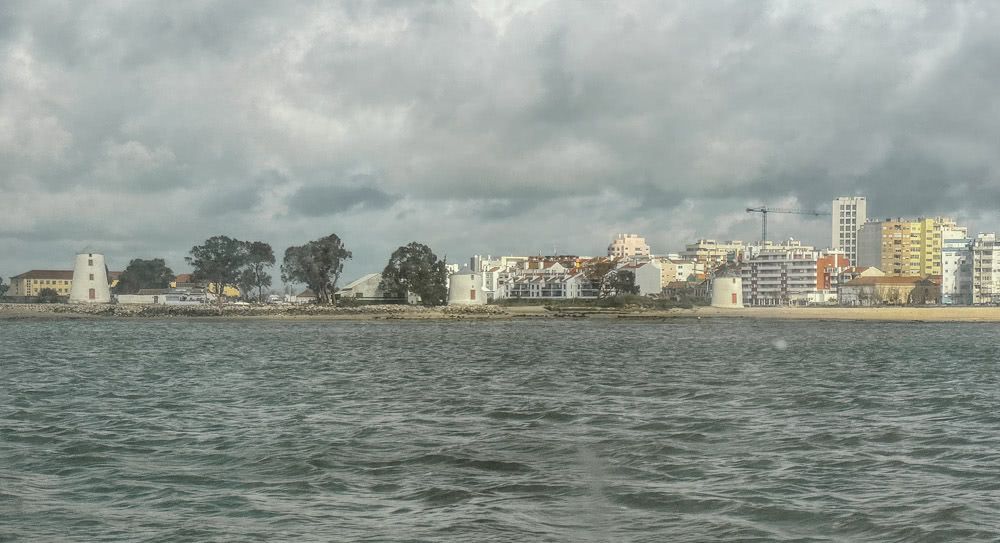
The three distinctive, conical buildings at the shore are old windmills that have been long decommissioned and are now a municipal heritage site2.
The Barreiro ferry terminal led us into a large plot of land which was part bus terminal, part parking lot. The clouds had begun to dissipate, the air was clear like it sometime is just after a rainy spell. The sun shone brightly and everything it touched gleamed. It all somehow felt magical.
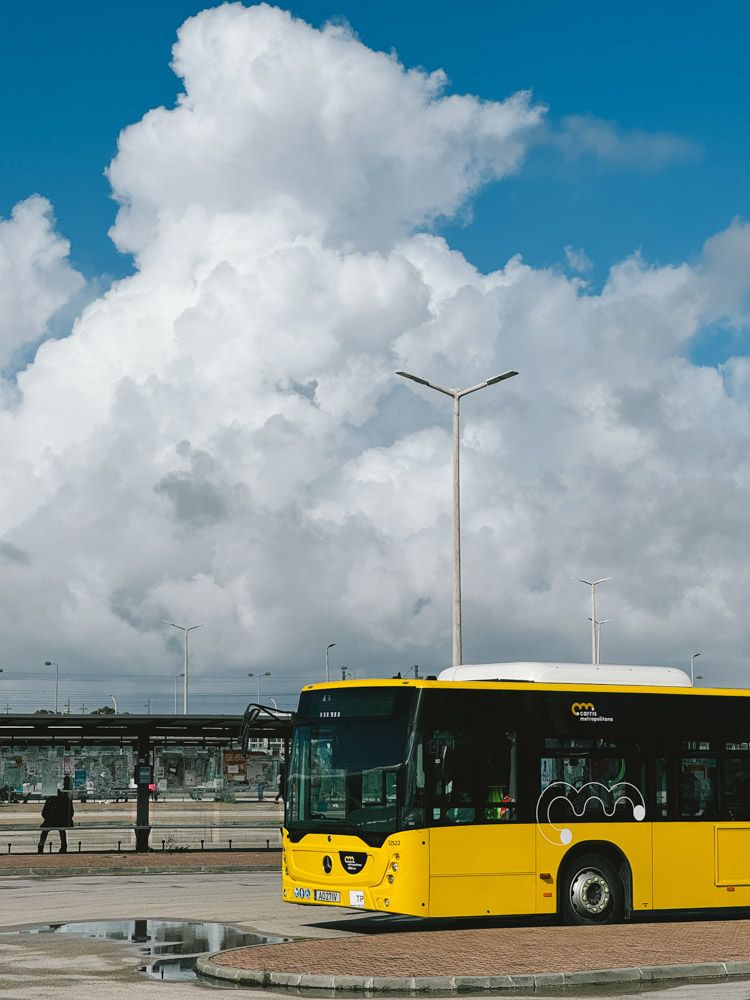
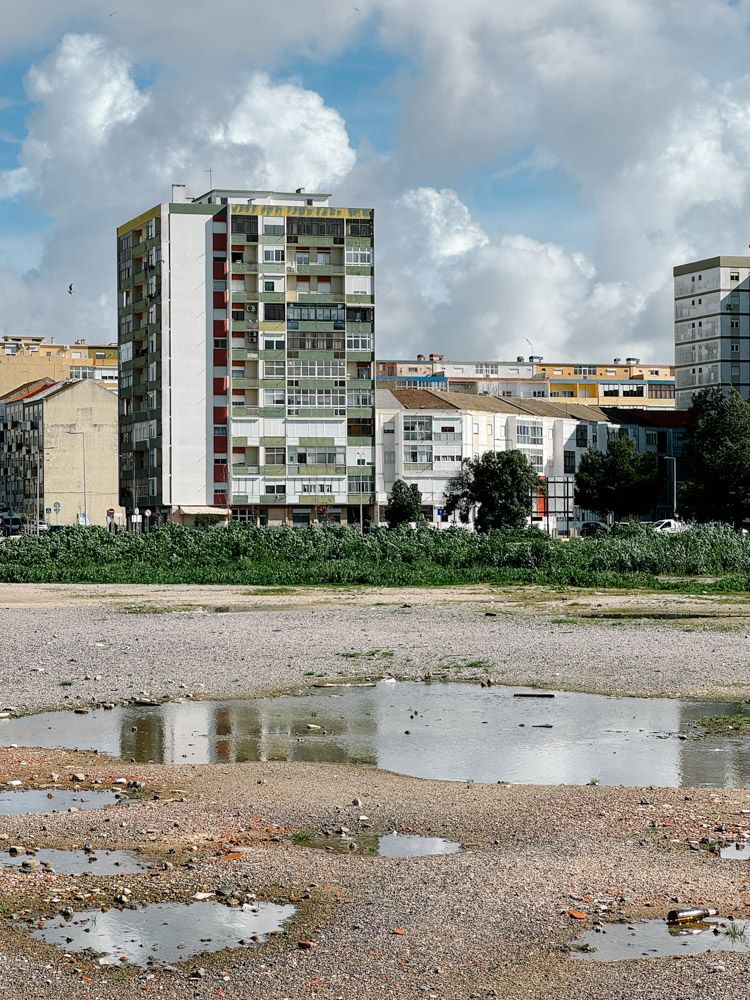
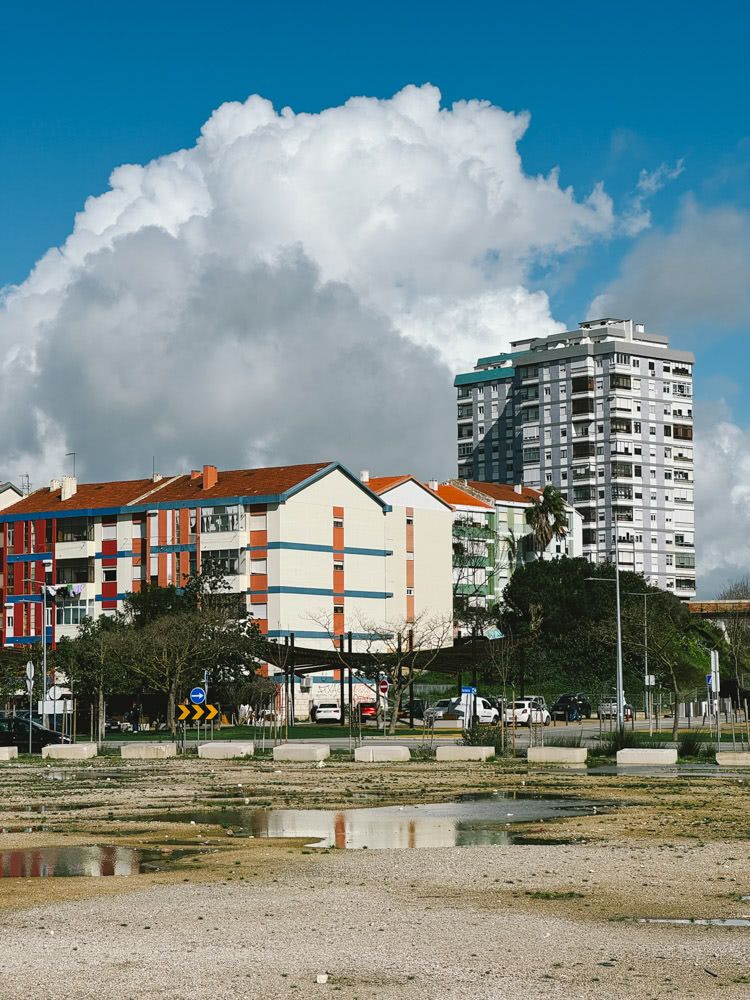
While I was wool-gathering, the wife had spotted a paved footpath alongside the river and decided to see where it would take us3.
At the start of our walk was a small beach littered with several small boats. It looked like they had been deposited by the tide as it went out.
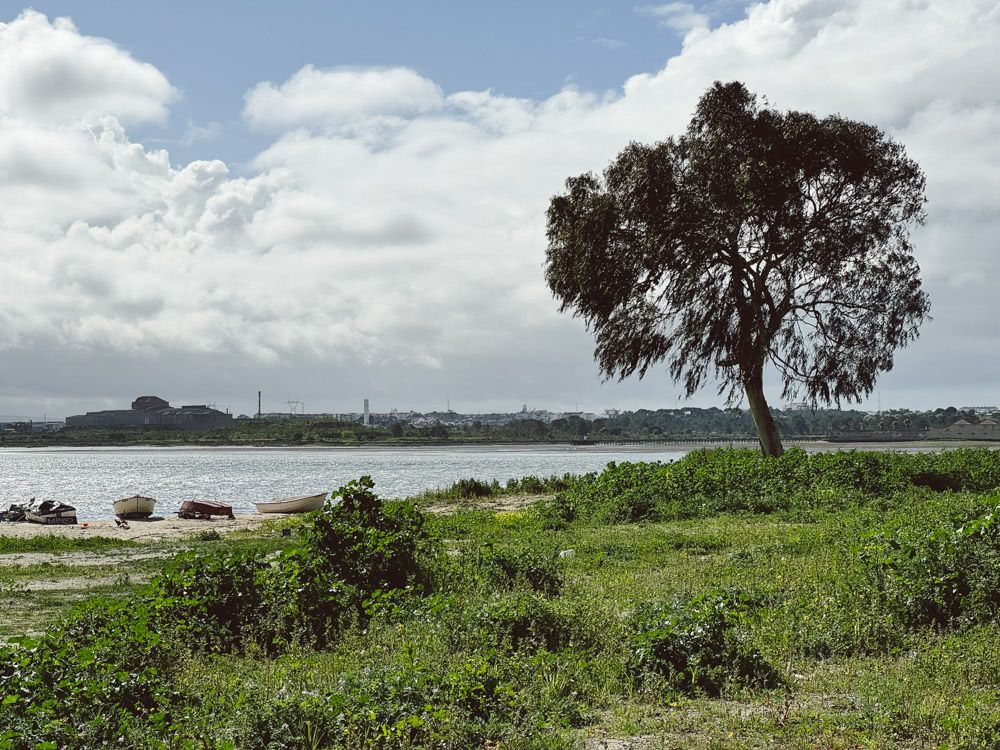
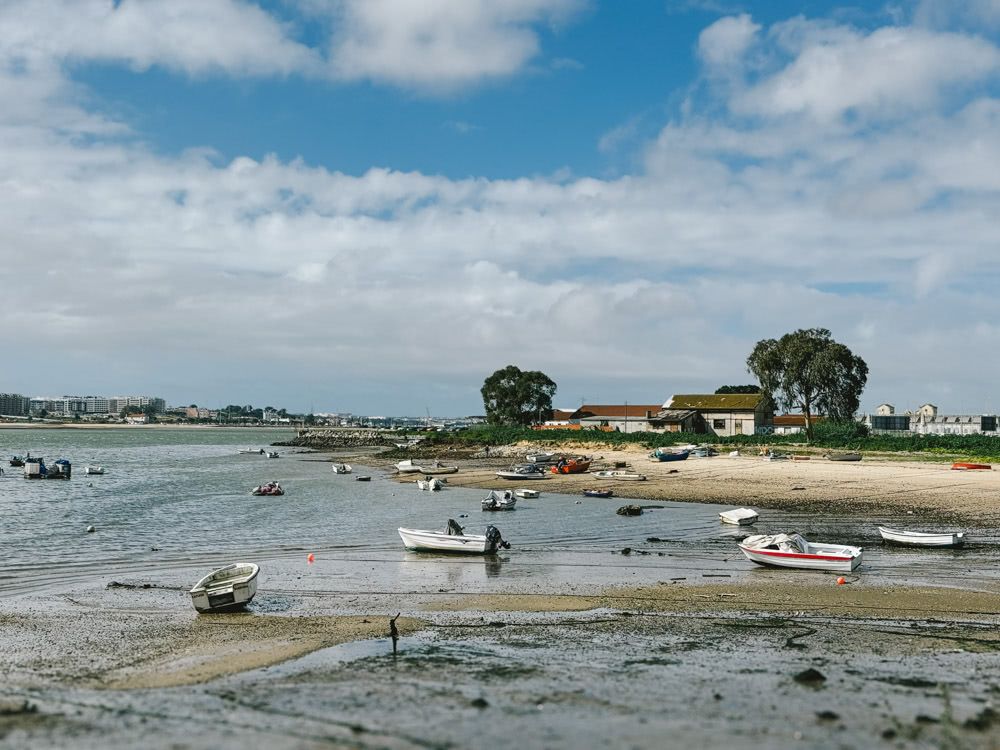
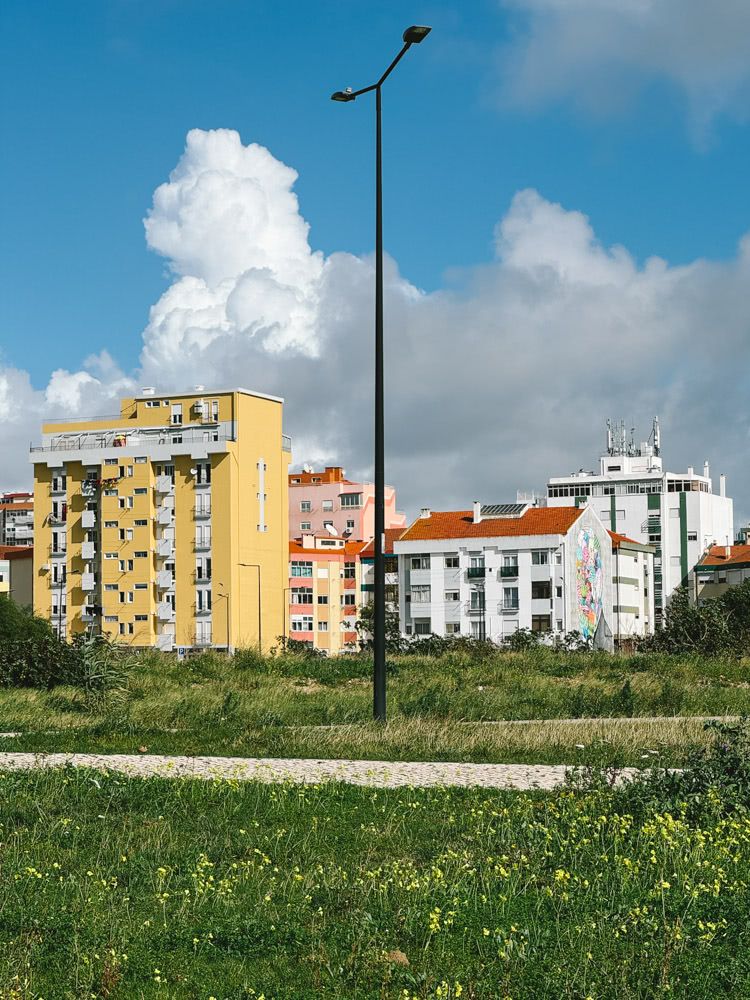
There were apartment buildings across from our walking path. They were all painted in different colours - some ochre, other peach, some grey (with a large colourful mural on one side) and some white. Collectively, under that azure sky and the cumulonimbus clouds, illuminated by the bright light of the mid-day sun, they seemed other-worldly.
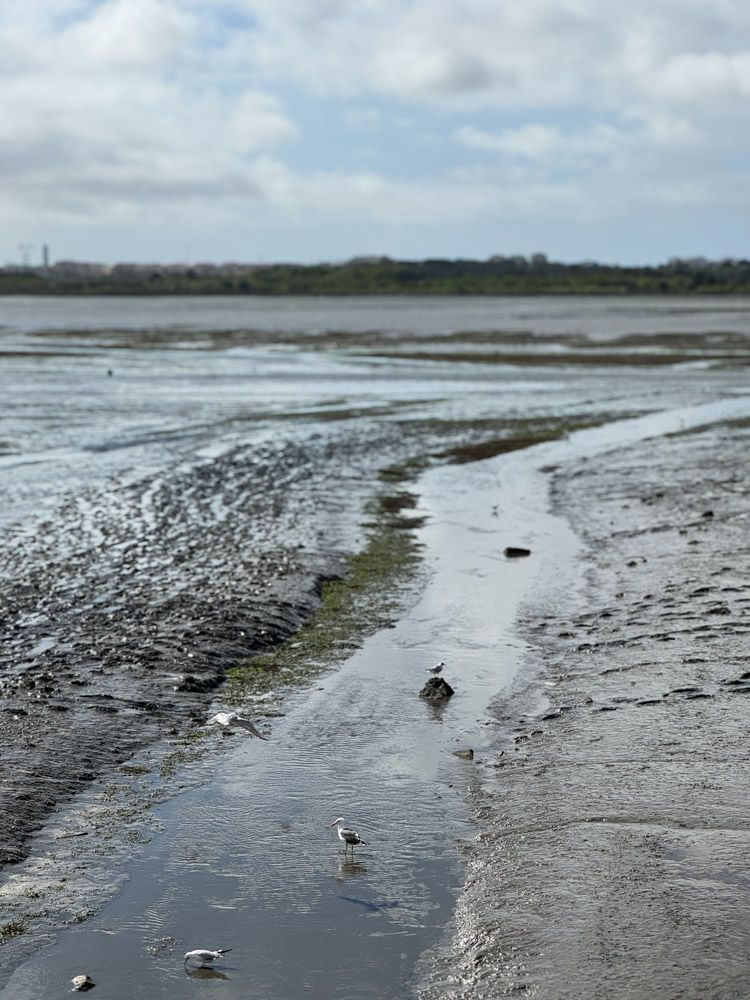
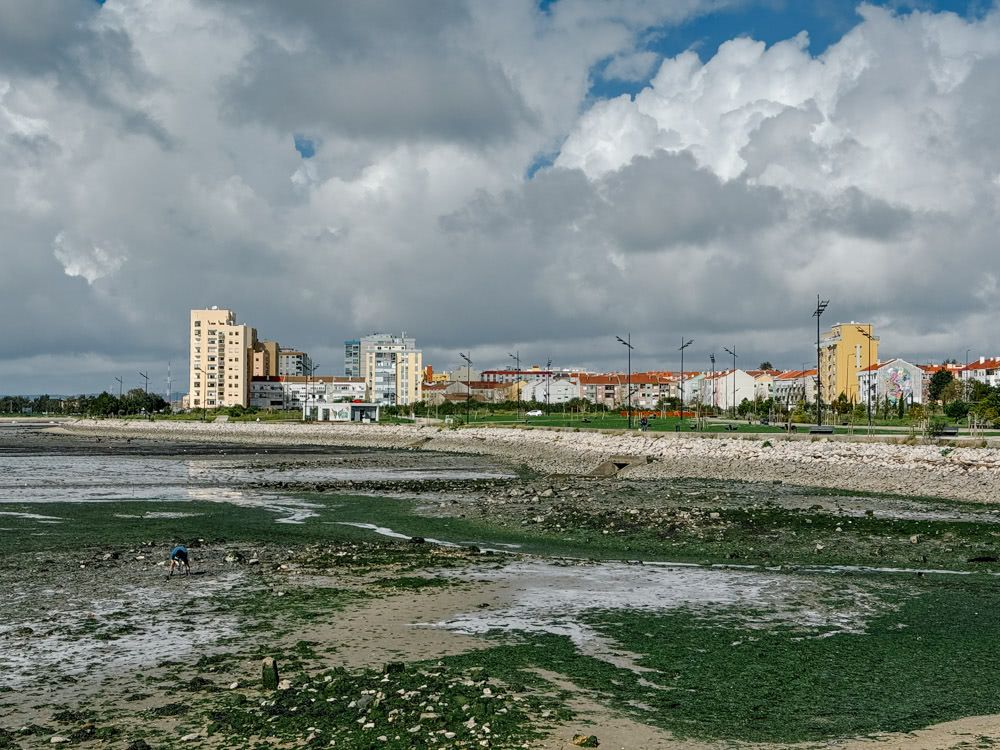
The tide was really low and there were small puddles and rivulets in which seagulls were foraging for food. We also saw many people in rubber boots, bent over and looking for something in the mudflats - clams? Or was there a gold rush on in these parts of the world that we didn’t know of?
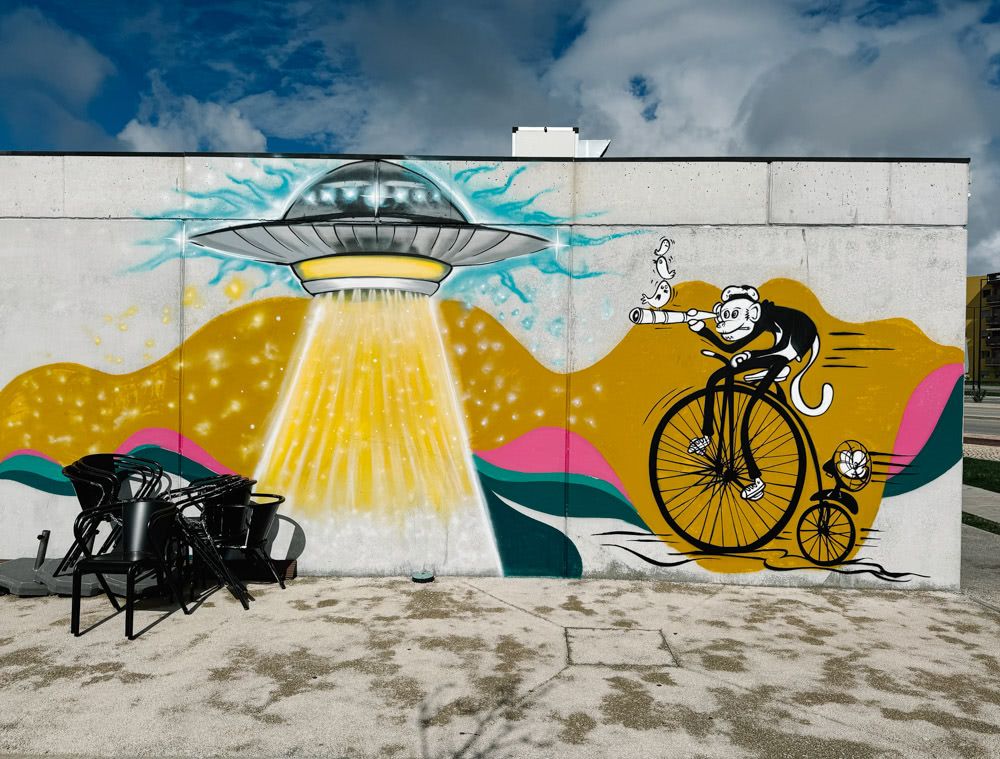
There were also many small cafes along our walk. Usually with facades decorated with colourful murals.
We settled in one of them for lunch. We had a view of a small park from one side of the cafe. There were retiree grandparents playing with their grandchildren while a couple of guys in their local football clubs’ t-shirts were doing their exercise routine. Hard not feel a little guilty when you are gulping your beer and gobbling your food. In our defence, there wasn’t much public transport in sight so we’d be walking all the way back to the ferry station.
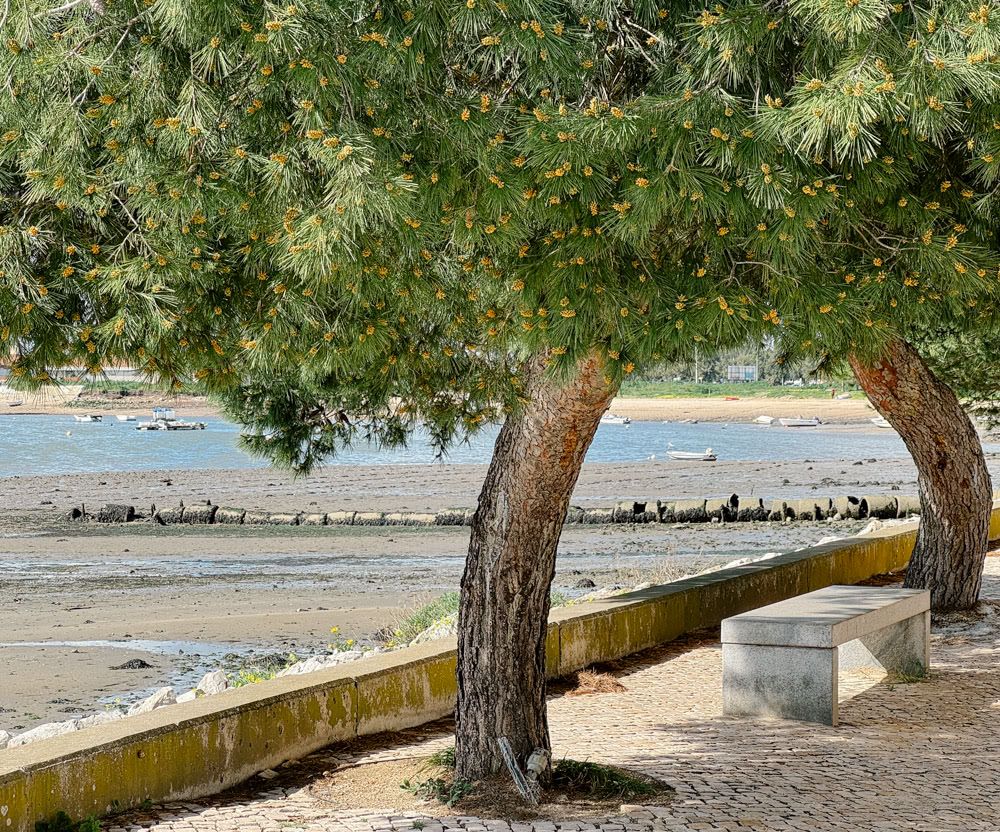
There were pine trees planted all along the footpath. They all bore hundreds of soft, pale buds.
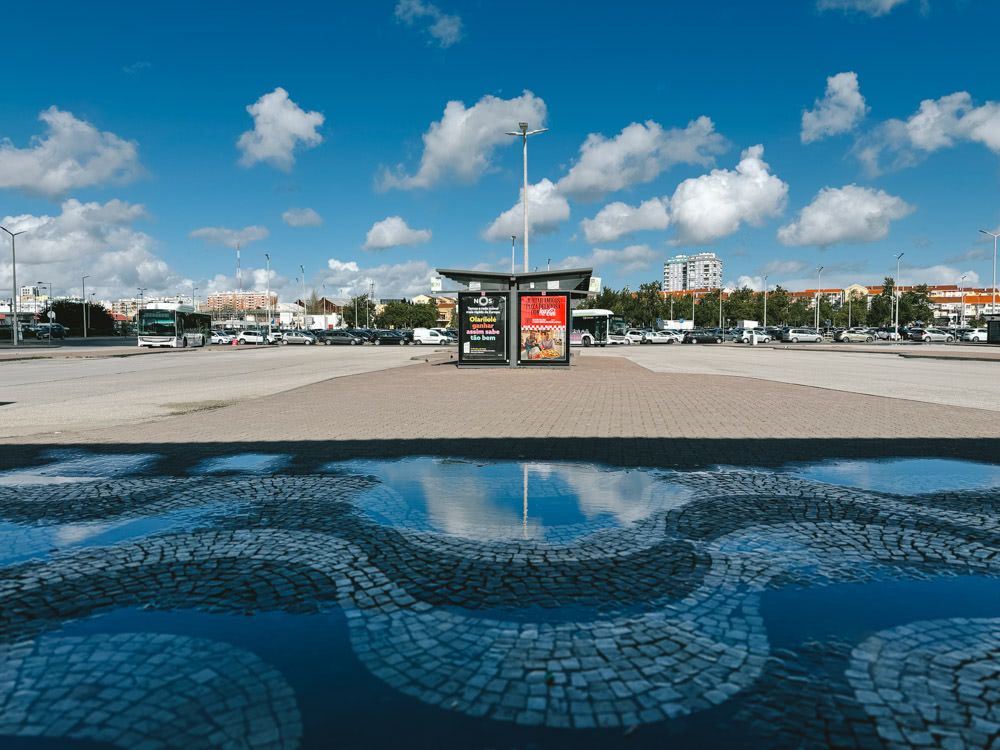
We were back at the Barreiro ferry terminal with a few minutes to spare for the next ferry to Lisbon. A couple of stalls inside the terminal that sold coffee and snacks were arranging cups and saucers on the counter for the influx of people that’d arrive on the ferry. I now found myself fascinated by the wave pattern on the terminal’s floor made with thousands of tiny tiles of black and white stones.
The turnstiles that gated the entry to the ferries’ boarding point had screens above them that along with the usual departure information, also showed ferry’s occupancy percentage. It would update as people would swipe their tickets to enter. The wife suggested we try to work out the ferry’s capacity based on how many people it’d take to bump the percentage up by one. Because when we are not trying to go past Genius on Spelling Bee, this is the sort of games we get on to these days. We worked it out to about 600. It seems to check out.
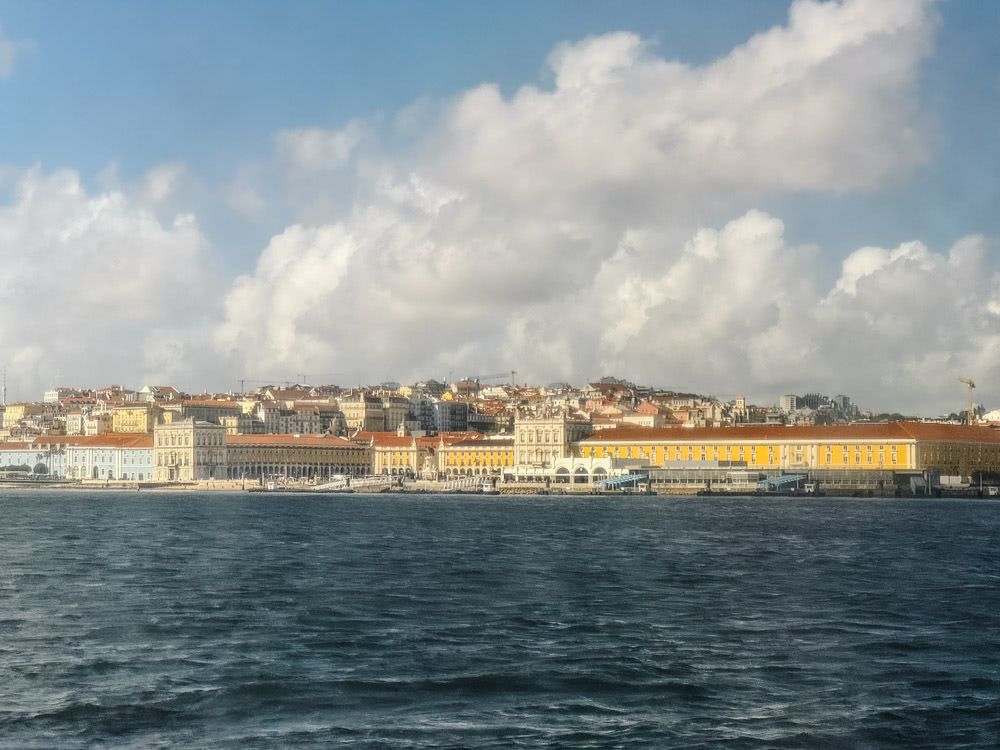
The windows we sat next to this time were somehow even dirtier than the last time. Still, I somehow managed to coax the telephoto lens on the iPhone to get this dreamy shot as we approached the Lisbon ferry terminal.
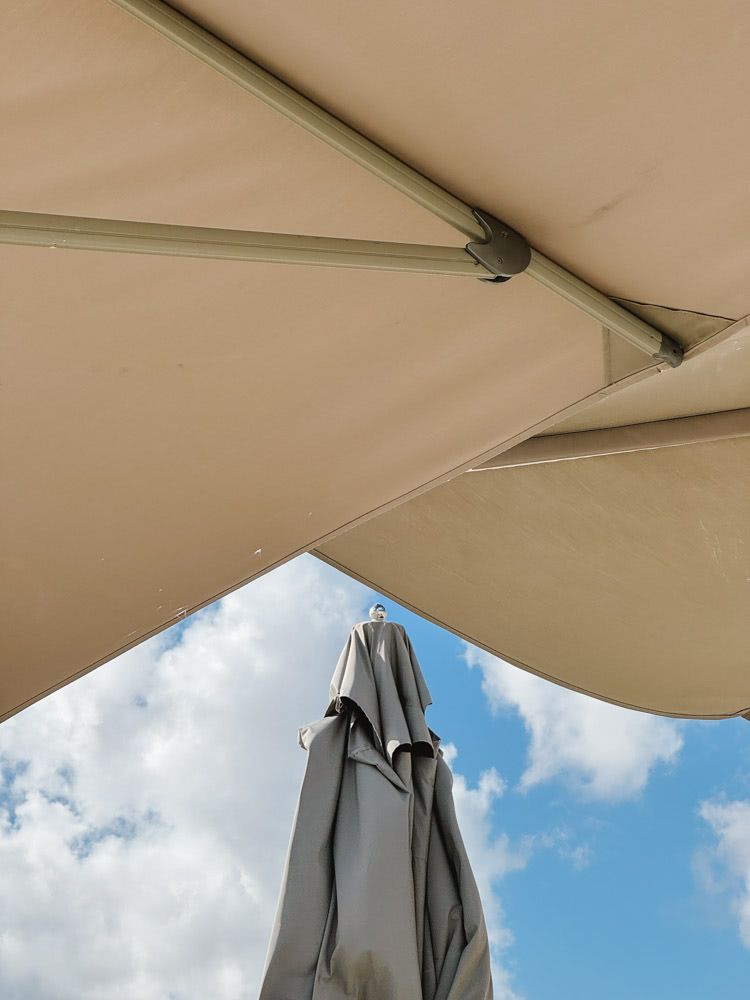
Once back, we sat down in the outdoor seating area of a café close to the terminal. We were in a mood to try something new. We spotted Mazagran under the coffee menu and ordered it. It turned out to be wonderfully refreshing. With espresso, lemon, ice and sugar as ingredients how could it not be? It was quite windy by now and the large outdoor umbrellas of the café were flapping madly.
Time to do something indoors-y. We settled on visiting the Gulbenkia museum. But that’s for another post. As we walked through the terminal to the metro station, I caught a glimpse of the view outside. I had to pinch myself to make sure I wasn’t inside a dream.
The only time we felt the ride get a little bumpy was when the other ferry from Barreiro to Lisbon crossed us mid-way and our ferry caught its powerful wake. But even that moment had nothing on that gut-churning ride to Capri from Naples back in 2019.↩︎
English translation of the text on this website: In 1852, three windmills were built in Alburrica: The Giant, the West, and the East. The East and West mills, of common typology, have a cylindrical tower with two floors, a movable roof, and two millstones. They were deactivated in 1950 and acquired by the City Council in 1973. The West Mill displays a votive registration in tile dedicated to Our Lady of the Rosary. The Giant Mill, of Dutch typology, was deactivated in 1919, and inhabited by fishermen until 1998 when it became Municipal Heritage.↩︎
There was a red bike path along this footpath and it was completely empty. Cycling in Barreiro and Lisbon seemed like an exclusive domain of food delivery couriers.↩︎
A walk along the route of Lisbon’s Tram 28
Lisbon’s iconic yellow trams are quite the tourist attraction. Tram no. 28 is especially popular as it takes a scenic route through the city’s historic neighbourhoods. We had sat in one during our visit to the city over a decade ago1. This time we were too put off by the crowd of people queuing up for a ride. Historic city centres of many European cities can sometimes begin to feel like theme parks. And a tram line mostly used by tourists feels like a joy ride. Anyway, here we were in Lisbon and staying a short walk from the first stop of tram 28. To assuage our guilt, we decided to just walk its entire route. Like one of those pilgrimages of penance some religions prescribe.
The trams, unlike the ones in Amsterdam, use a single carriage only. Two of them had queued up at a turn before the stop and the drivers were having a friendly chat.
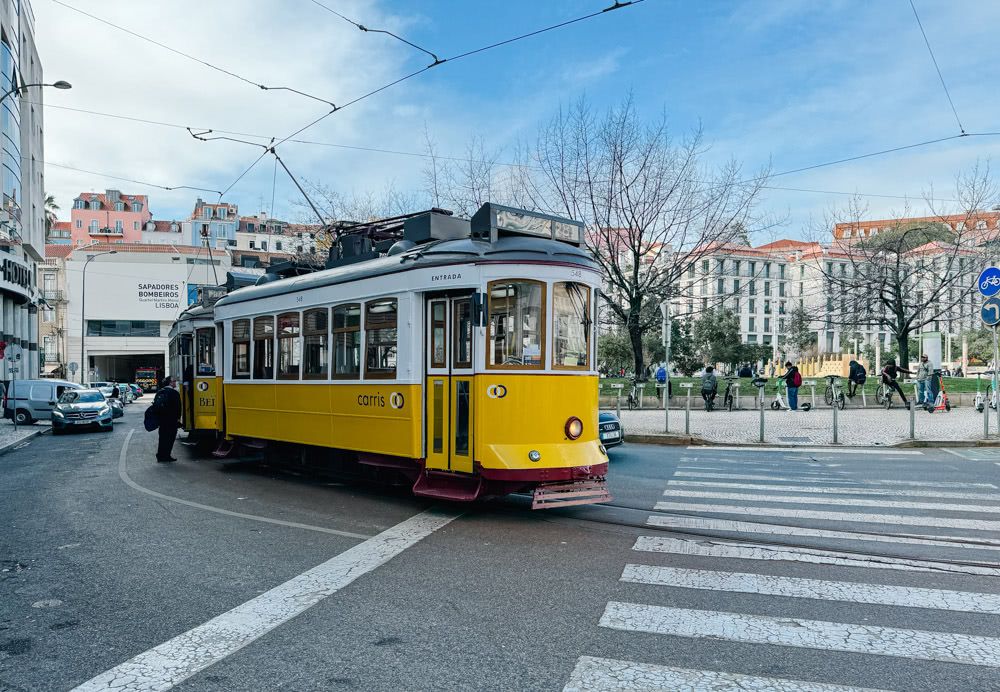
There was a small queue at the bus/tram stop for the tram. We were visiting Lisbon during the Chinese New Year week so this particular street had been decorated with red lanterns.
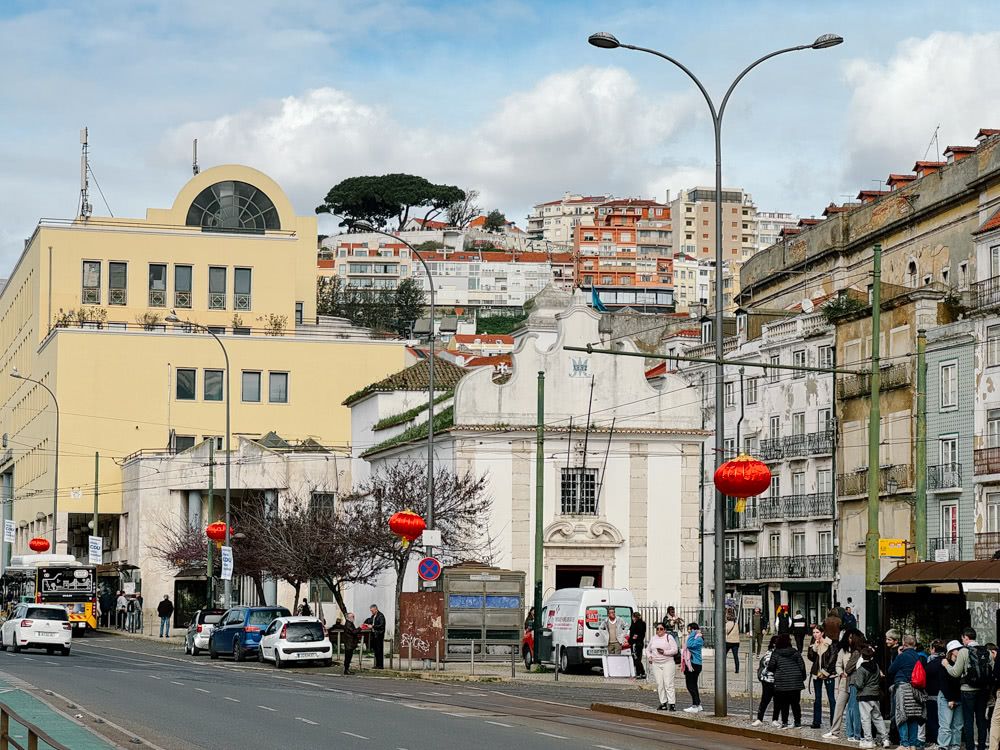
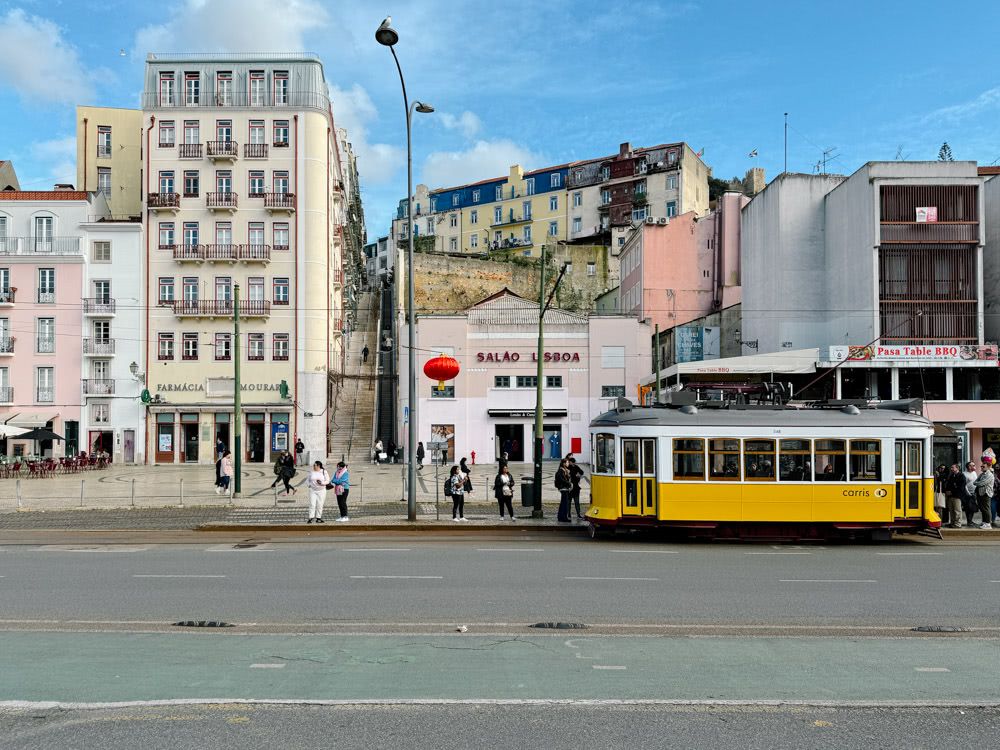
These were taken on the evening of the second last day of our stay. The wife and I had had quite a full day and were tired. We aborted the walk after a couple of stops.
The next day promised to be warm and sunny. We resumed the walk where we left it. We mostly followed the tram tracks all the way but the wife occasionally consulted Google Maps to:
make sure that we were indeed following the right tram’s track after they’d fork
take any diversions and side-alleys that were more interesting than what was on offer along the tracks
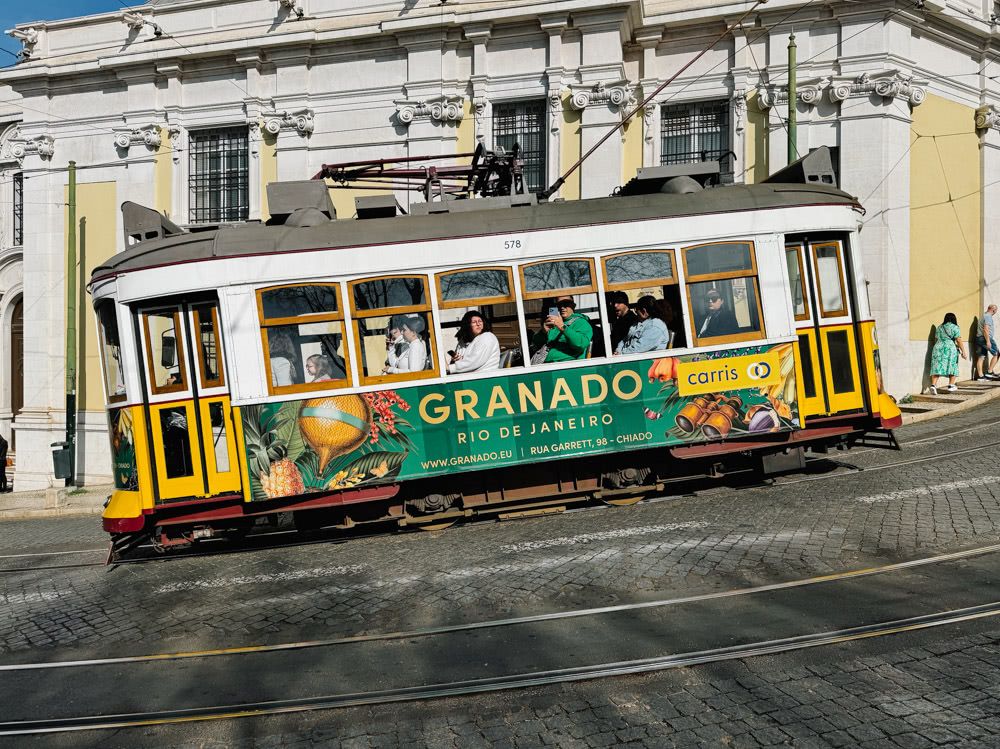
To our slight dismay, not all trams were entirely yellow. Many now featured advertising, like this Samsung one2. I saw this one coming from far away. A car had been partially parked on the tracks so it was held up for a couple of minutes. The tram driver frantically dinged its bell till the car was removed. A small traffic jam had begun to materialise behind the tram and a small entourage of cars now drove in its wake.
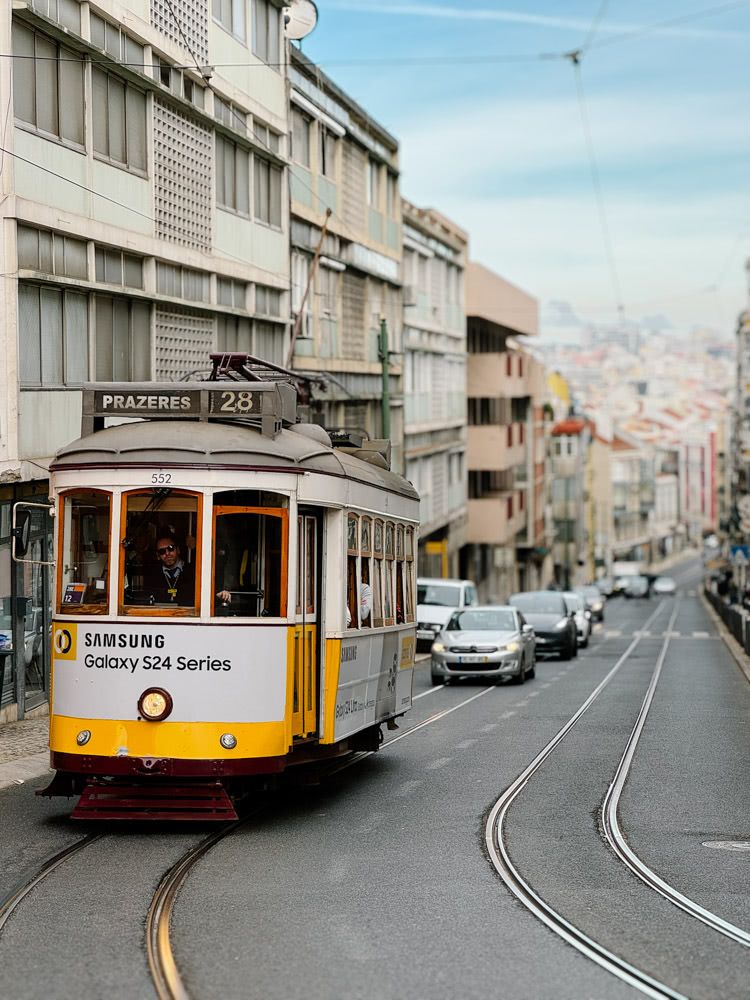
I also noticed, perhaps for the first time, how narrow the tram tracks were.
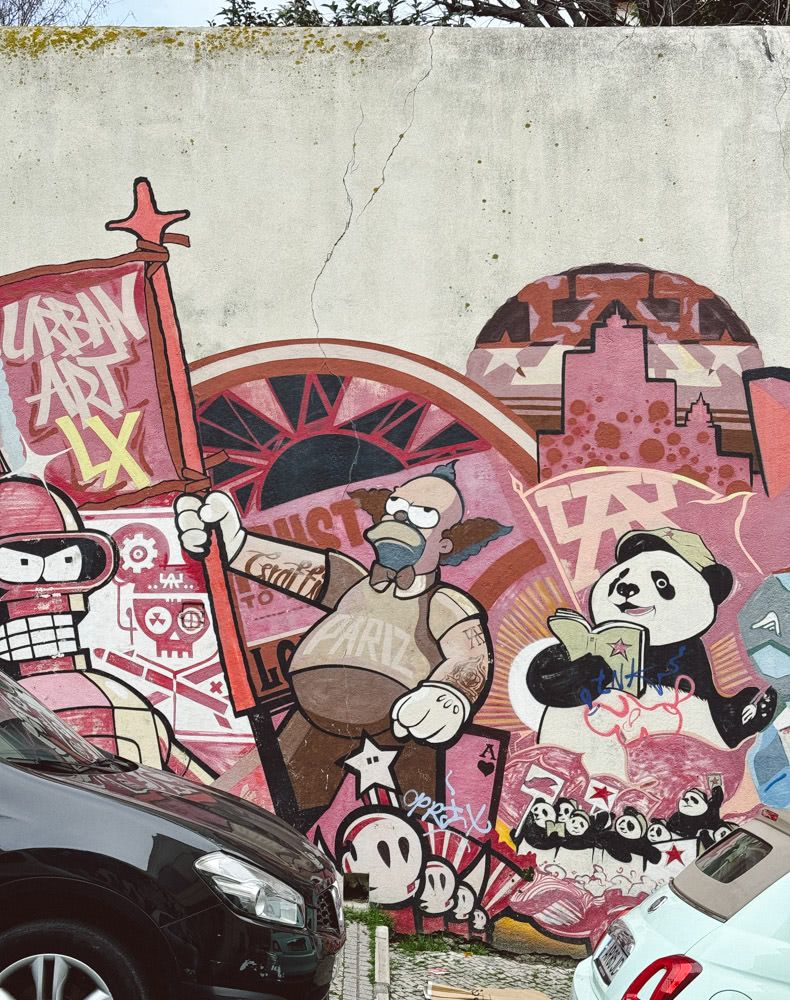
A side alley (Tv. São Vincent) had a colourful, large mural painted on the compound wall of one of the buildings. There were cars parked in front of it so it was hard to get a decent picture of it3.
Many houses are really close the tram tracks.
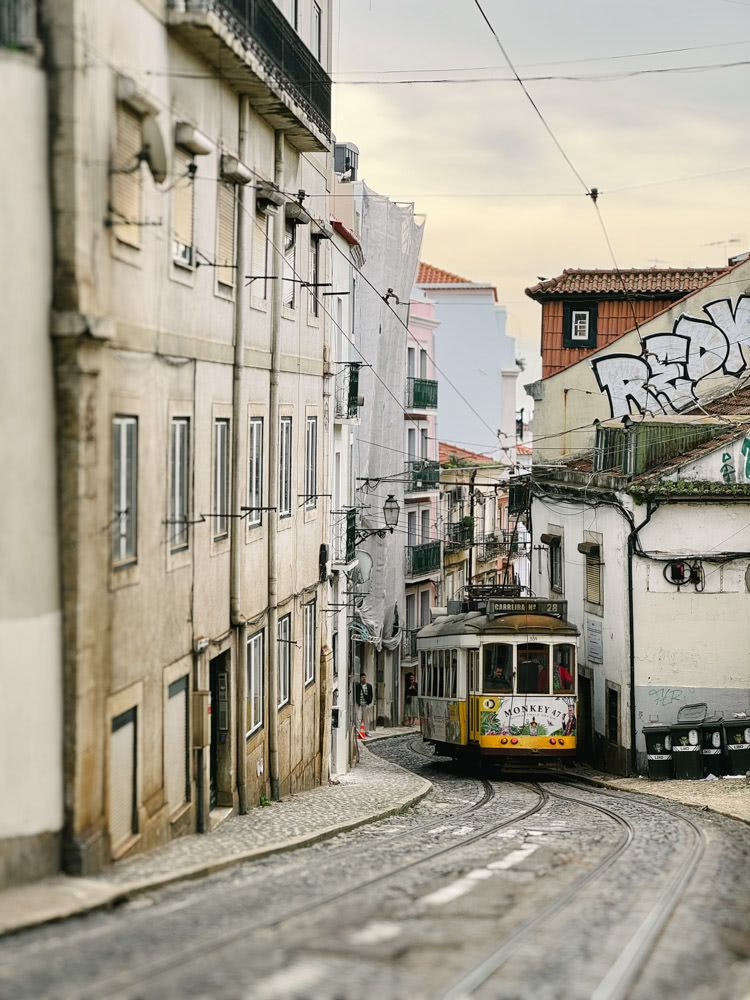
I loved how compact and elegant this one looked.
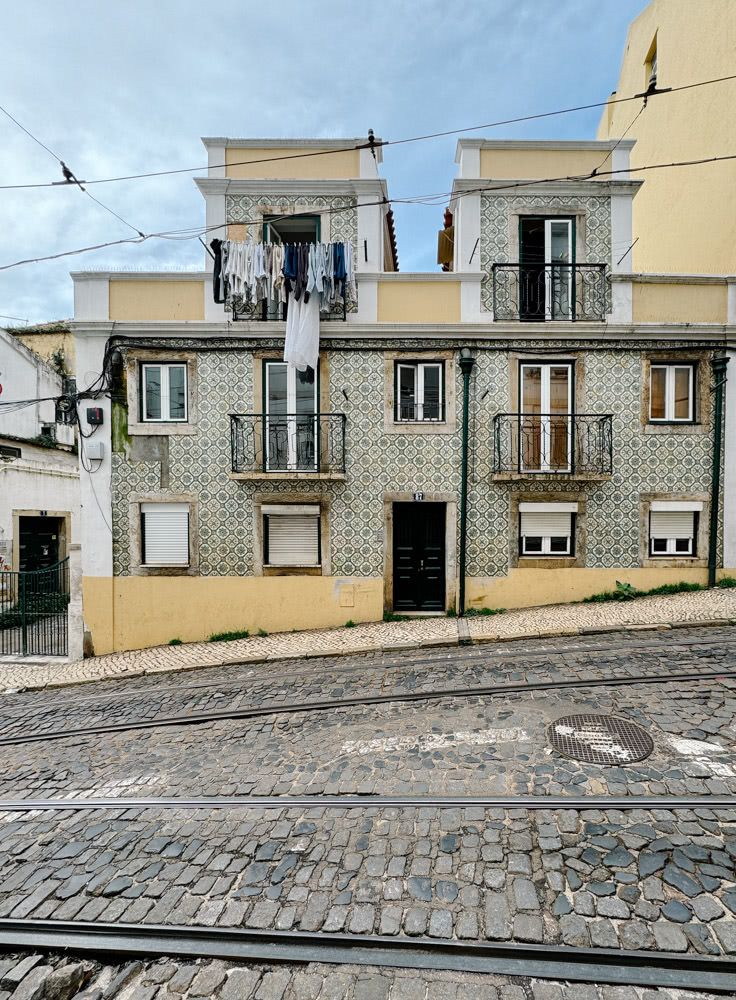
Though I wonder how it must be like to live in one. The trams do make a loud rumbling noise when they pass. It must not be pleasant to have one pass by your doorstep every few minutes. Could you ever learn to tune it out?
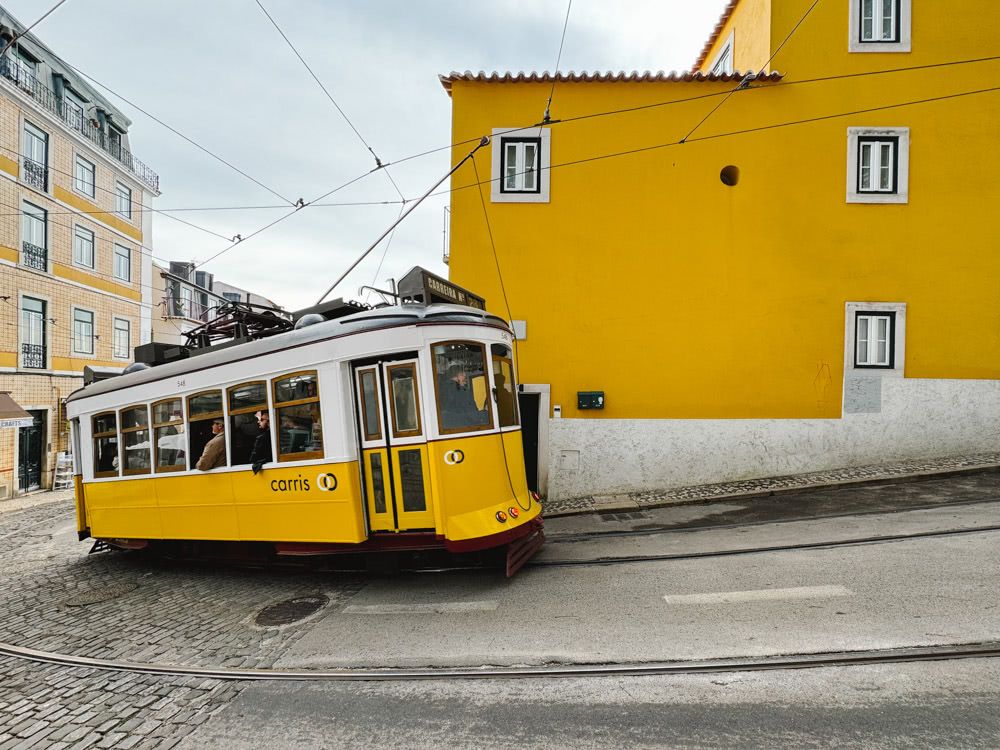
We finally did catch a plain yellow tram4 sans any advertising - just as it passed a house painted the same shade of yellow. Are you not entertained?
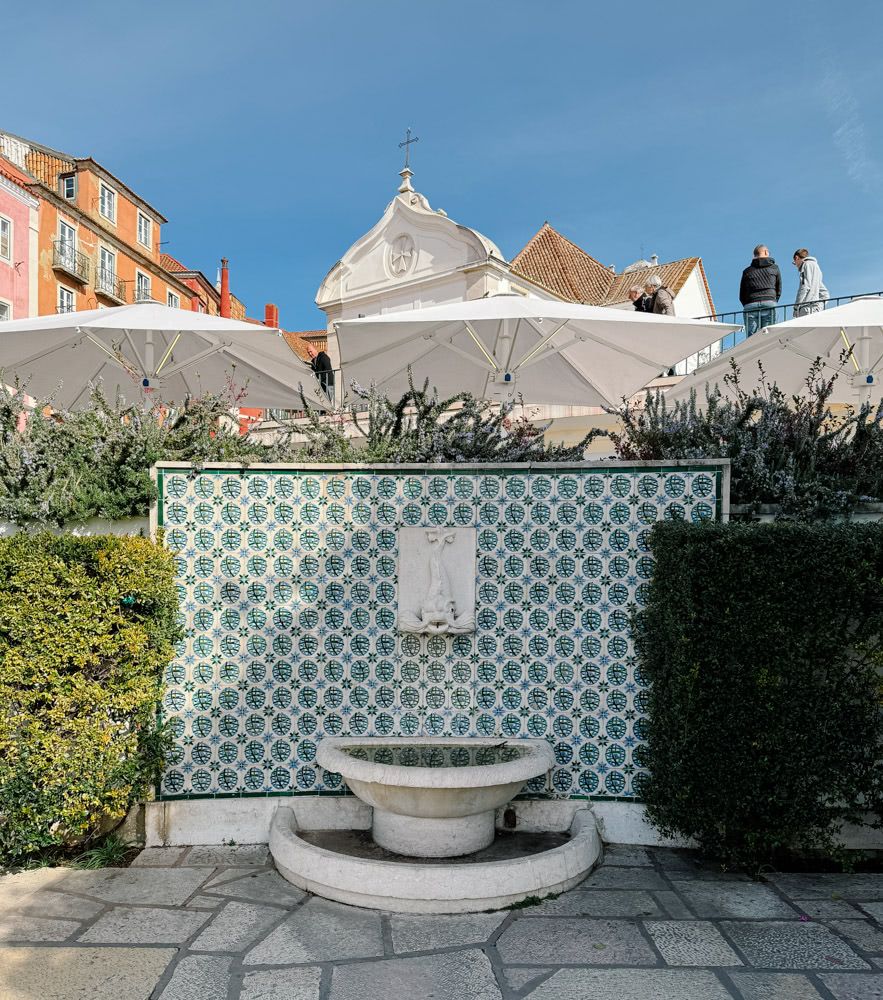
The path of Tram 28 eventually led us to the Santa Luzia church which, being at an elevation, offers sweeping, panoramic views of Lisbon and the Tagus River. We had spent considerable time here during our last trip and rather than the views I found myself drawn to this tiled fountain.
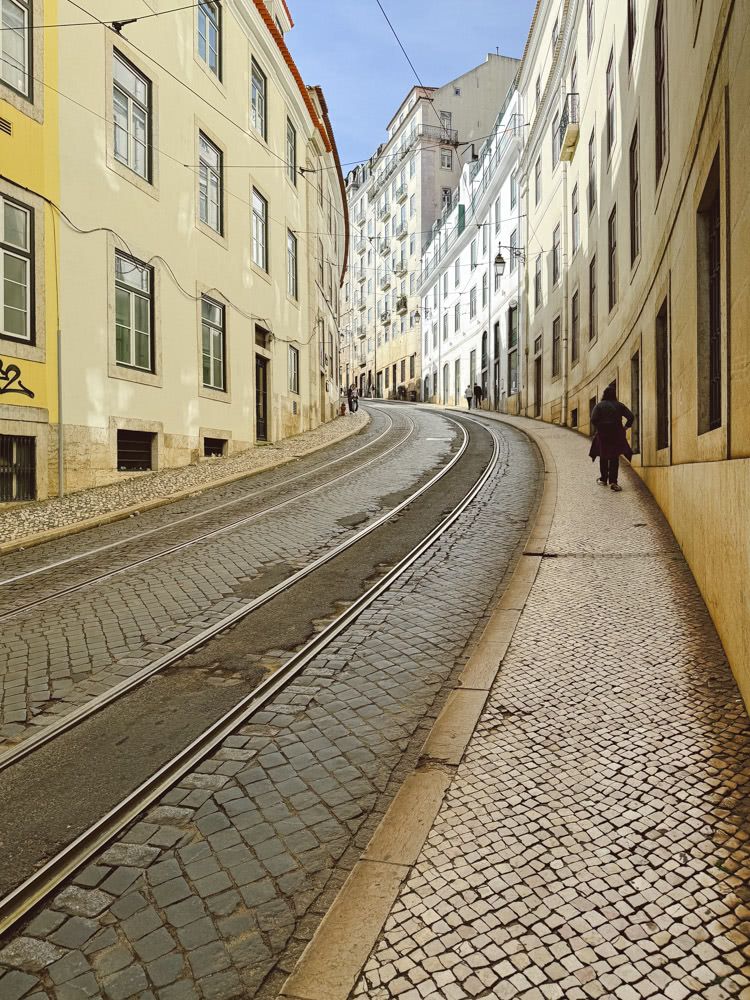
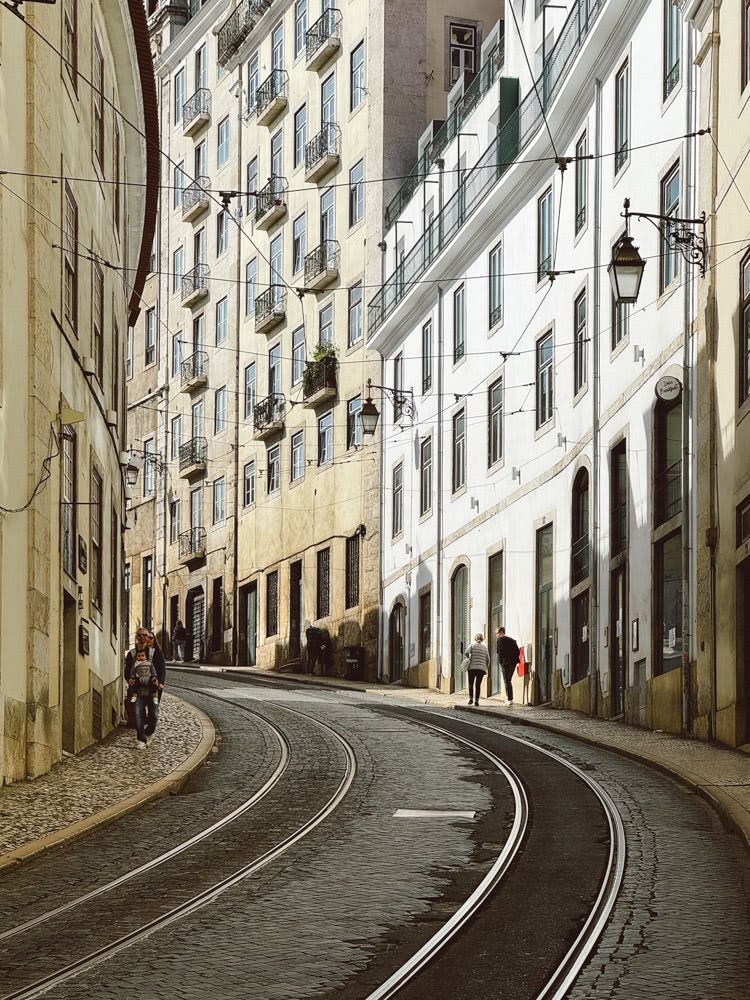
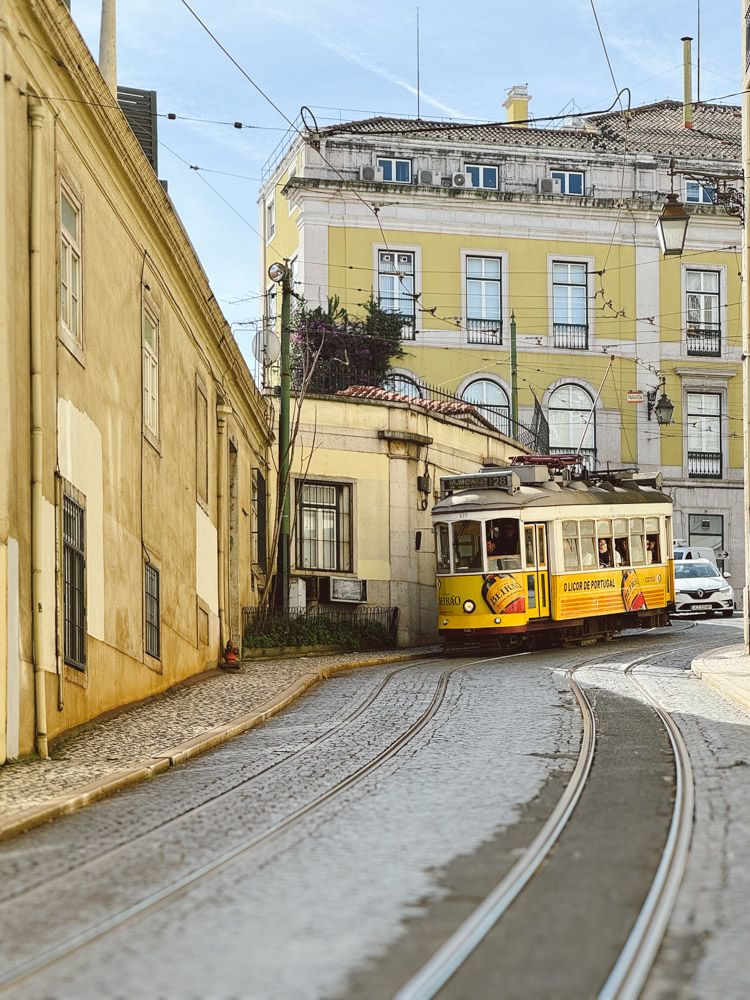
We were close to the halfway mark. The tracks continued to guide us through narrow, winding streets of Lisbon. The trams kept passing us by.
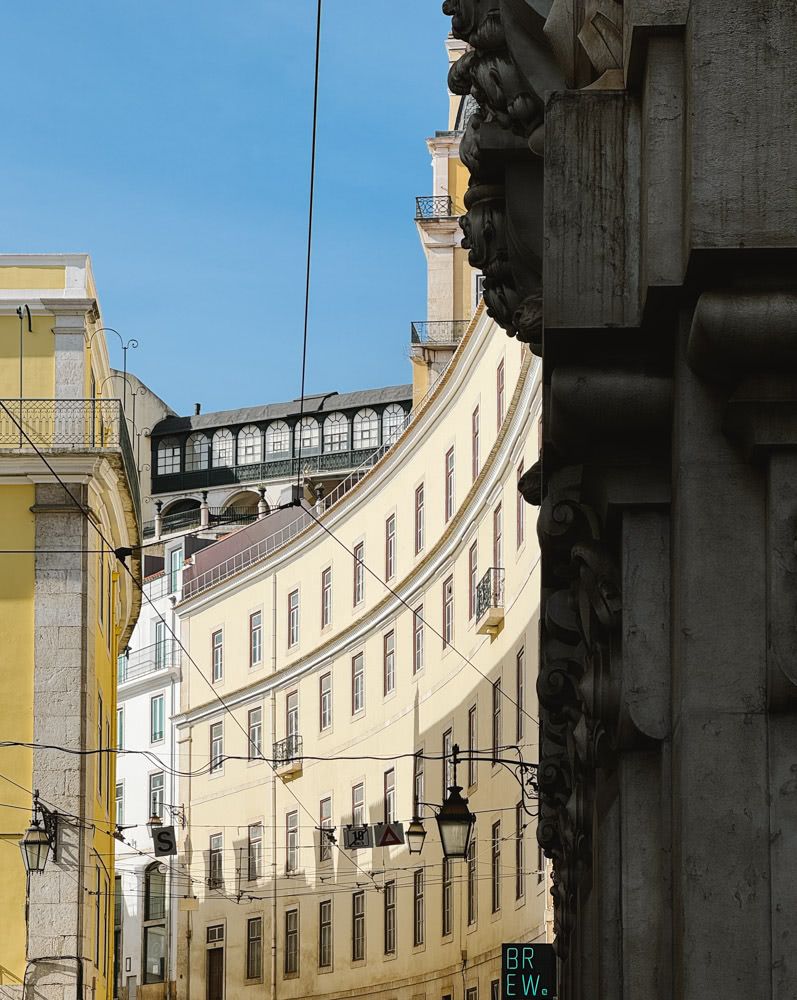
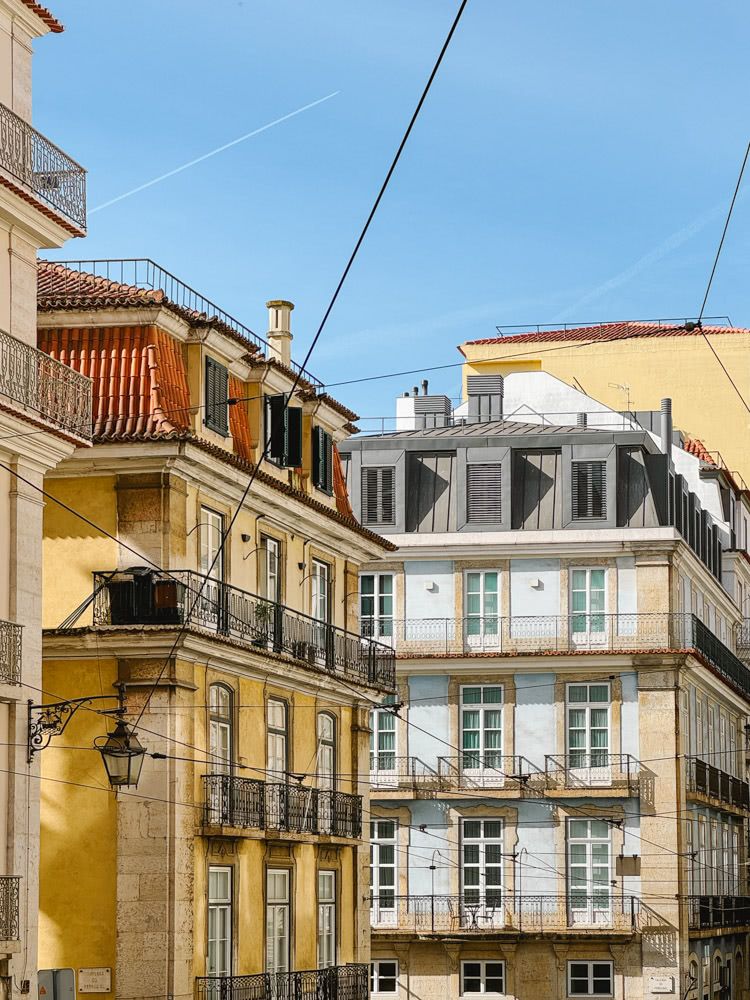
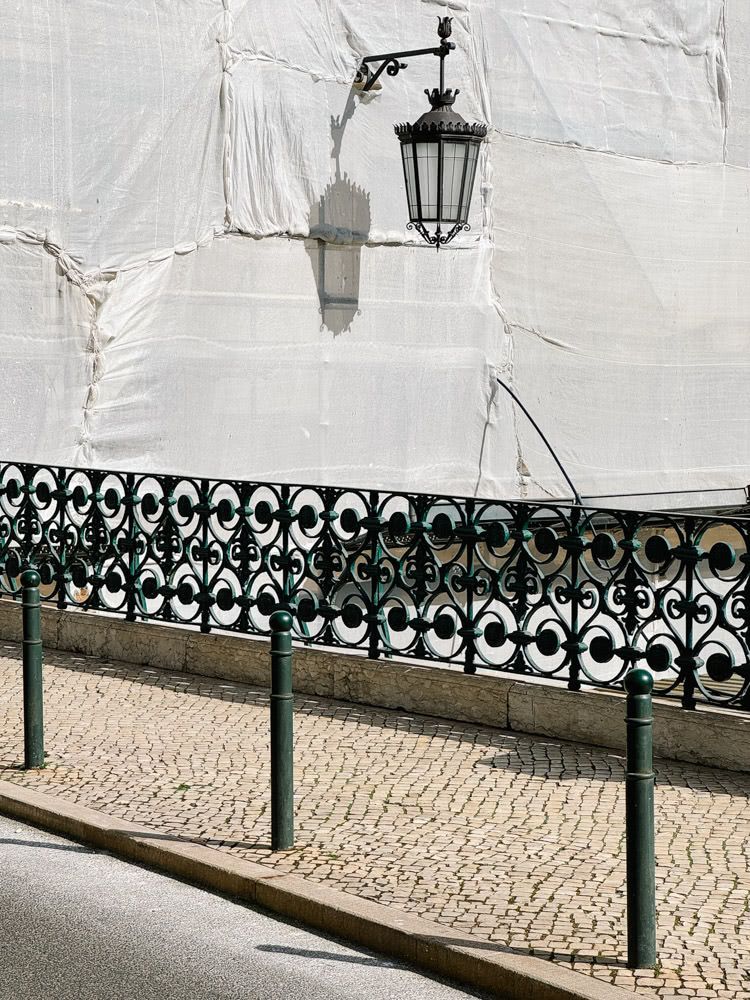
A building that was being repaired, was covered in white tarp. I marvelled at how they had manoeuvred around the beautiful wrought-iron and glass street lamp to let it protrude.
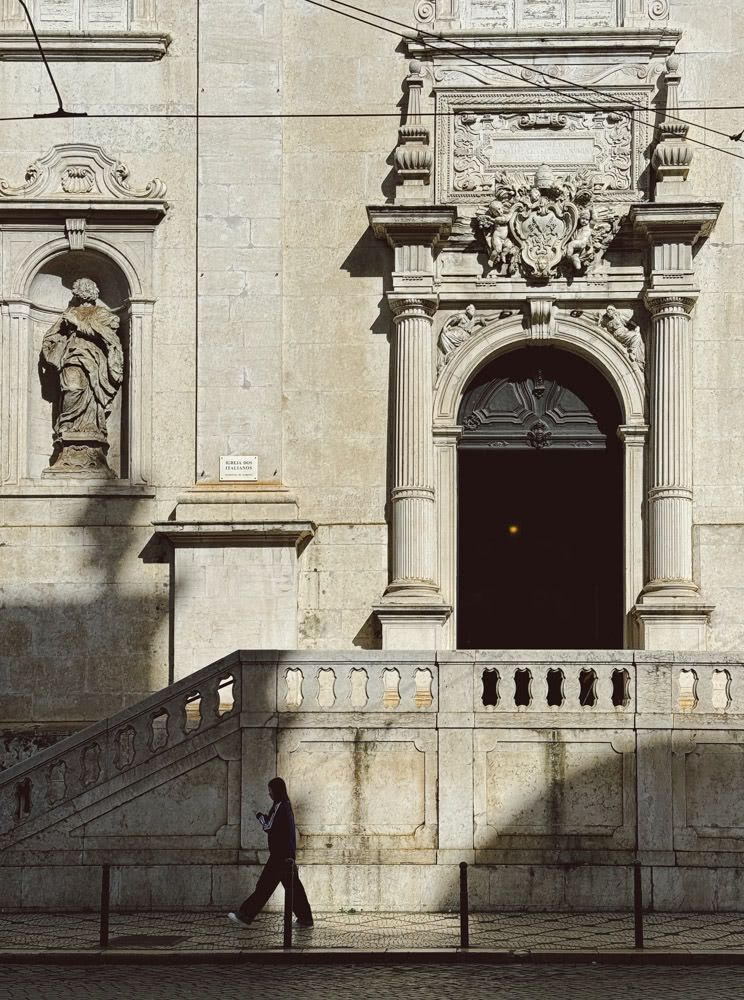
It had easily been 90 minutes since we had started walking and a short coffee break was in order. We sat down at a local chain near the Church of Loreto (aka the Church of the Italians).
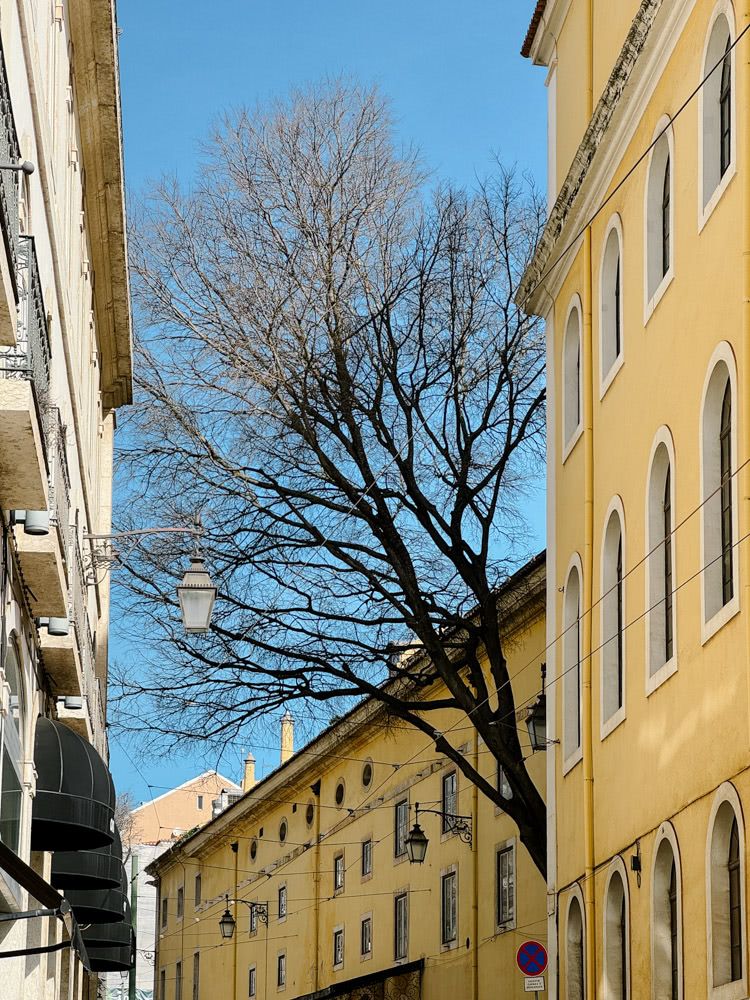
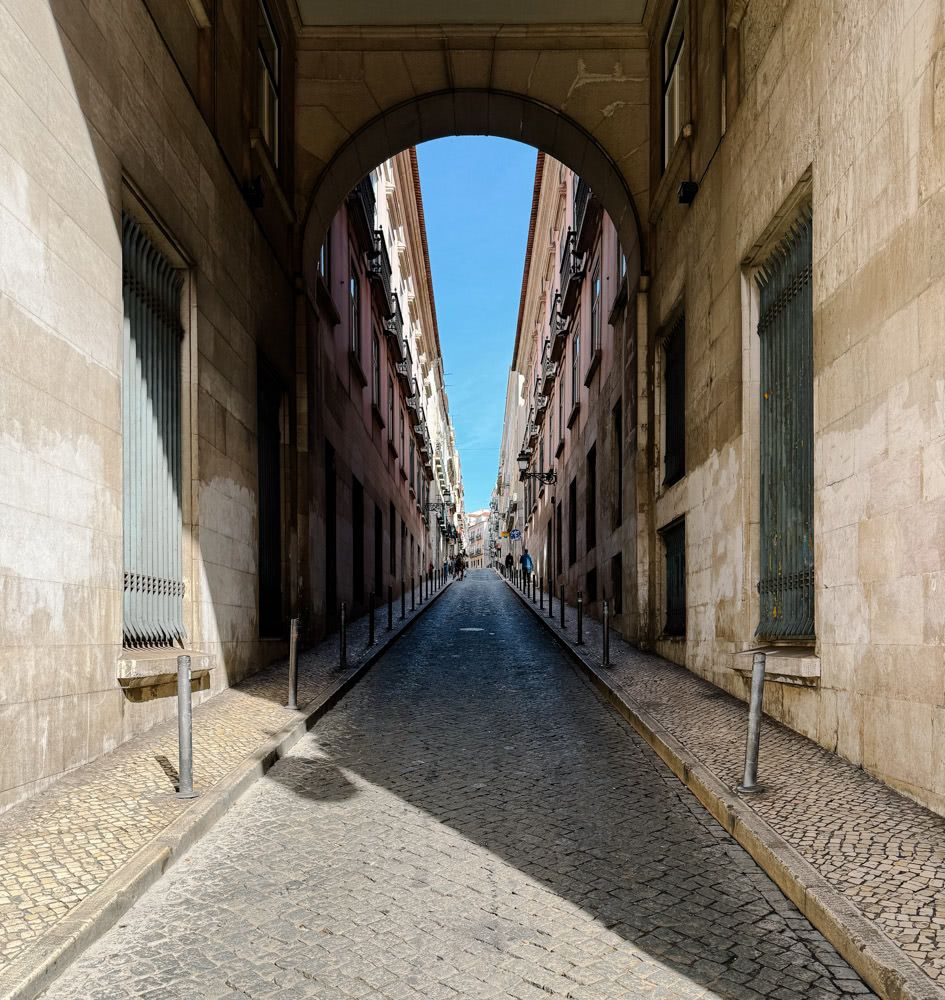
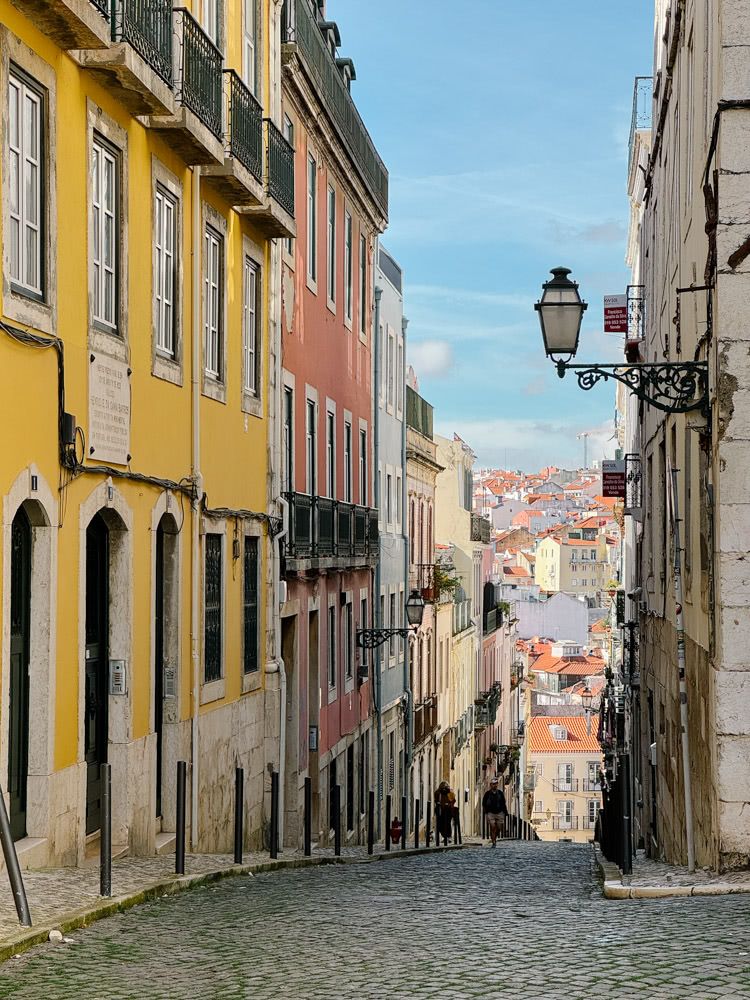
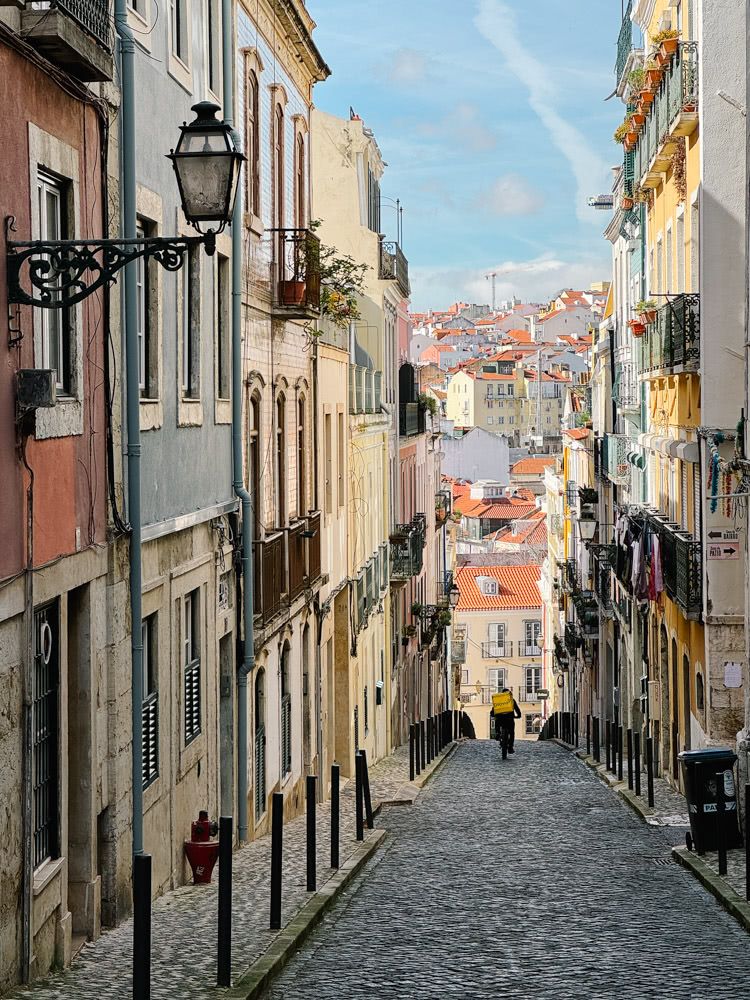
Refreshed, we resumed our walk but it soon dawned on us that we had a flight to catch in the afternoon. There was a good hour left in our walk - perhaps longer at our leisurely pace that borders on languid once you account for the stops for taking pictures. We decided to abort the walk along the tram route and changed course towards the nearest bus stop with a connection to our hotel - but not before taking some more pictures to remember the day by:
Not sure which number we took.↩︎
Oh no, Samsung again. They sure are spending a lot of marketing dollars.↩︎
This Google Street View will give you a good sense of it. There are cars parked in front in the Street View too. And something in the mural triggers Street View’s face detection and so it keeps blurring out parts of it to protect their privacy.↩︎
Except for the logo of the public transport agency Carris that runs them.↩︎
Thoughts on DALL·E 3
In less than a year, the quality of the images generated by DALL·E has improved dramatically. In Oct’22 I had given DALL·E 2 some unusual cricket related prompts. I revisited them to compare the results against DALL·E 3.
My first prompt:
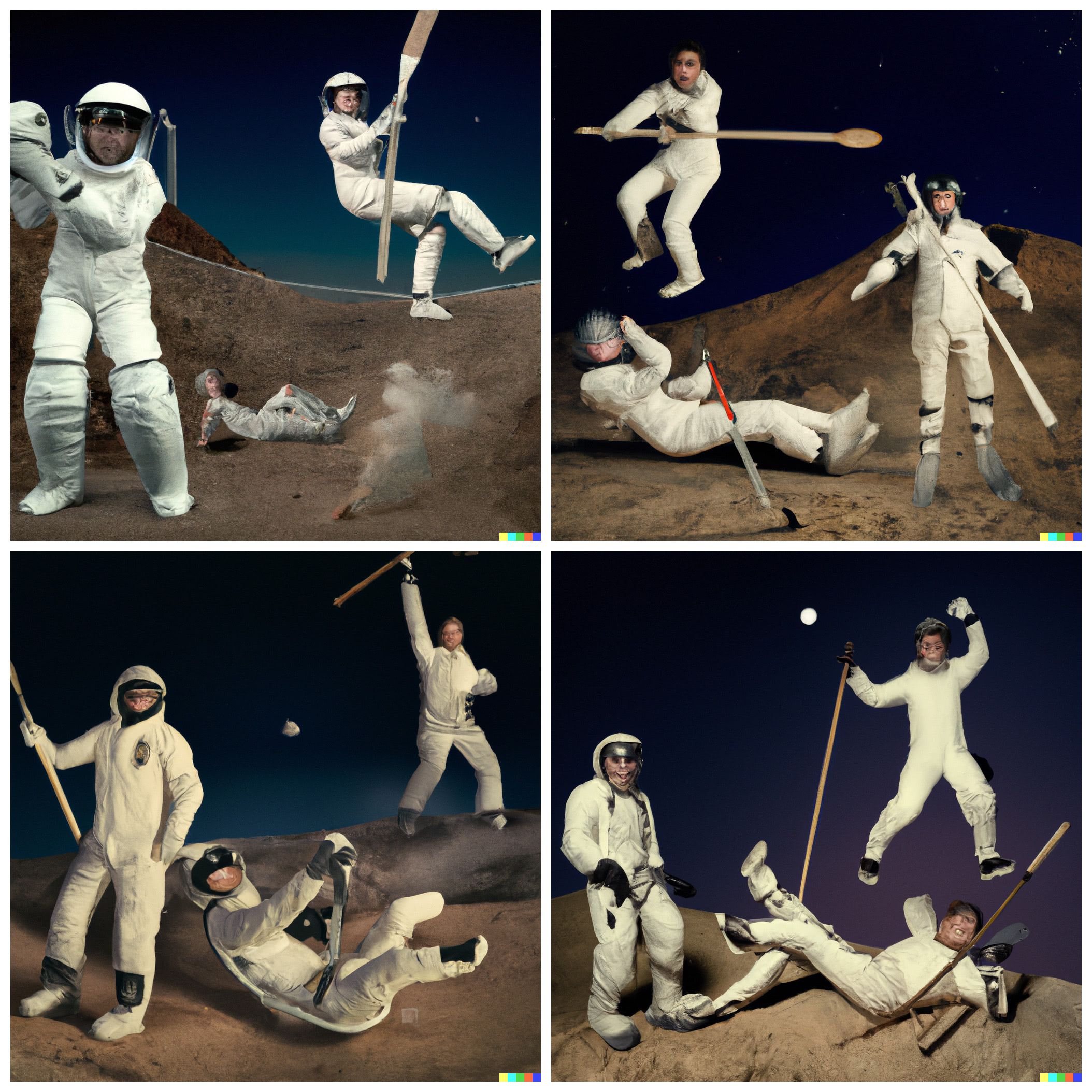
Astronauts playing cricket on moon
Resulted in a set of these four images:
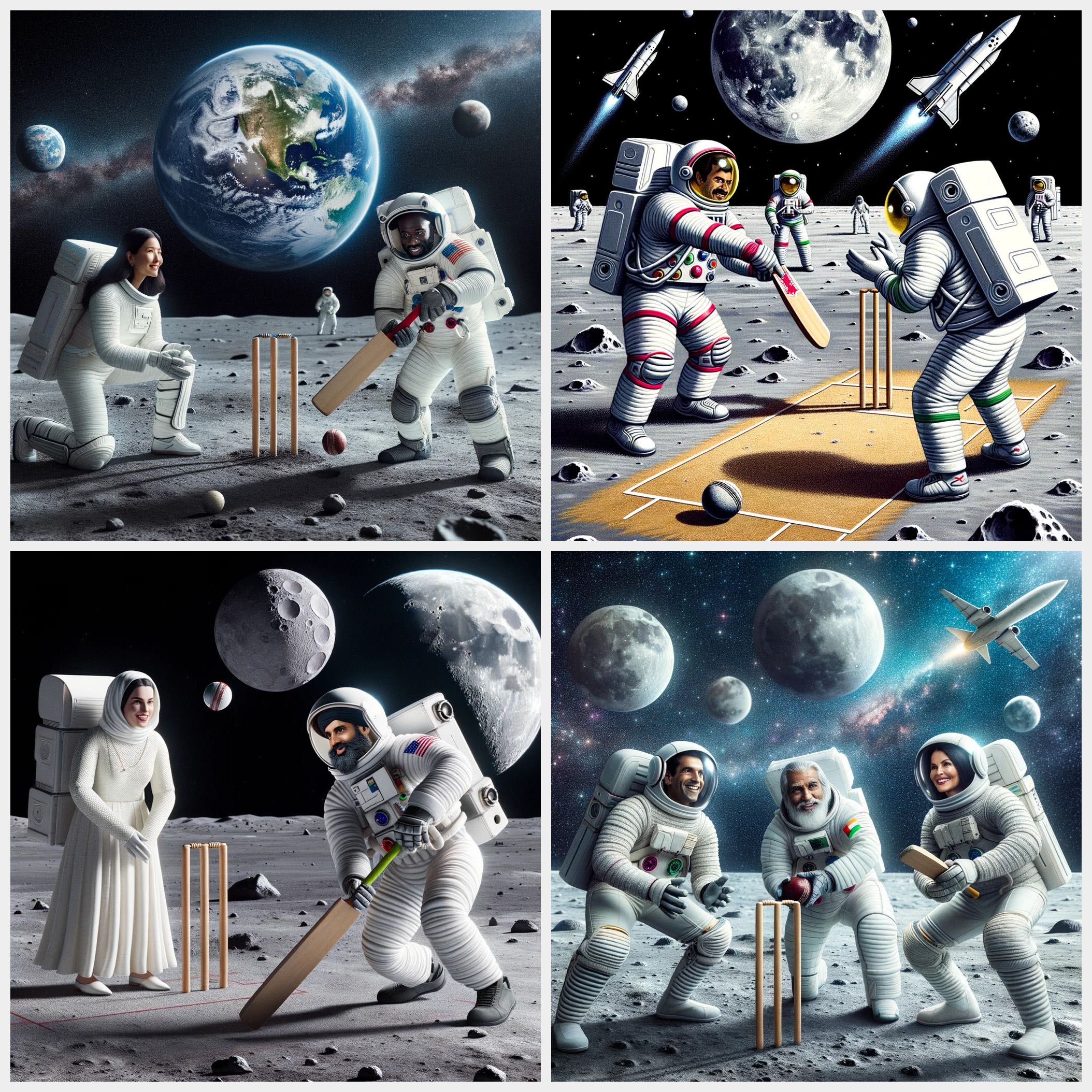 Astronauts playing cricket on moon
While DALL·E 2 had struggled to render the humans, the wickets and the bats accurately, DALL·E 3 had no problems with them. Sure, there are still a lot other issues with these images - multiple moons or earths in the background, missing helmets, beard jutting out of at least one astronaut’s visor and in one case, batsmen standing across the width of the crease rather than its length. But still, I couldn’t help but be impressed by how far we have come in a matter of months. DALL·E 2 had seemed quite revolutionary back then but relative to DALL·E 3, its output looks like grotesque smudges.
One of the questions I had raised in my original post…
What race or skin tone should the AI have given to these depictions of humans? To say nothing of their gender. Did DALL·E try to cop out of having to settle this question by generating generic illustrations of humans in spacesuits as the first three choices? The reality with AI is often more anodyne - it merely reflects the images the model was trained on.
…seems to have been addressed.
This prompt covers two human endeavours that are not very diverse individually, let alone their intersection. DALL·E 3 still did a fine job of producing pictures that were very inclusive. It does so by rewriting your prompts before feeding them into the image generation pipeline. In doing so, it adds a bit more detail and variation. My succinct five-word prompt was rewritten four times with specifics of gender and race:
Photo of a female astronaut of Asian descent and a male astronaut of African descent playing cricket on the moon’s surface, with Earth in the background.
Illustration of two astronauts, one of Hispanic descent and one of Caucasian descent, engaged in a game of cricket on the moon. The moon’s craters and the pitch are clearly visible.
Rendered image of a male astronaut of Middle Eastern descent bowling to a female astronaut of European descent on the moon. The cricket bat, ball, and wickets are clearly seen.
Photo of three astronauts, one male of Indian descent, one female of Indigenous descent, and another male of mixed race, playing cricket on the moon with the stars shining brightly above.
My second prompt…
Astronauts playing cricket on moon with three slips and a gully and earth rising in the background
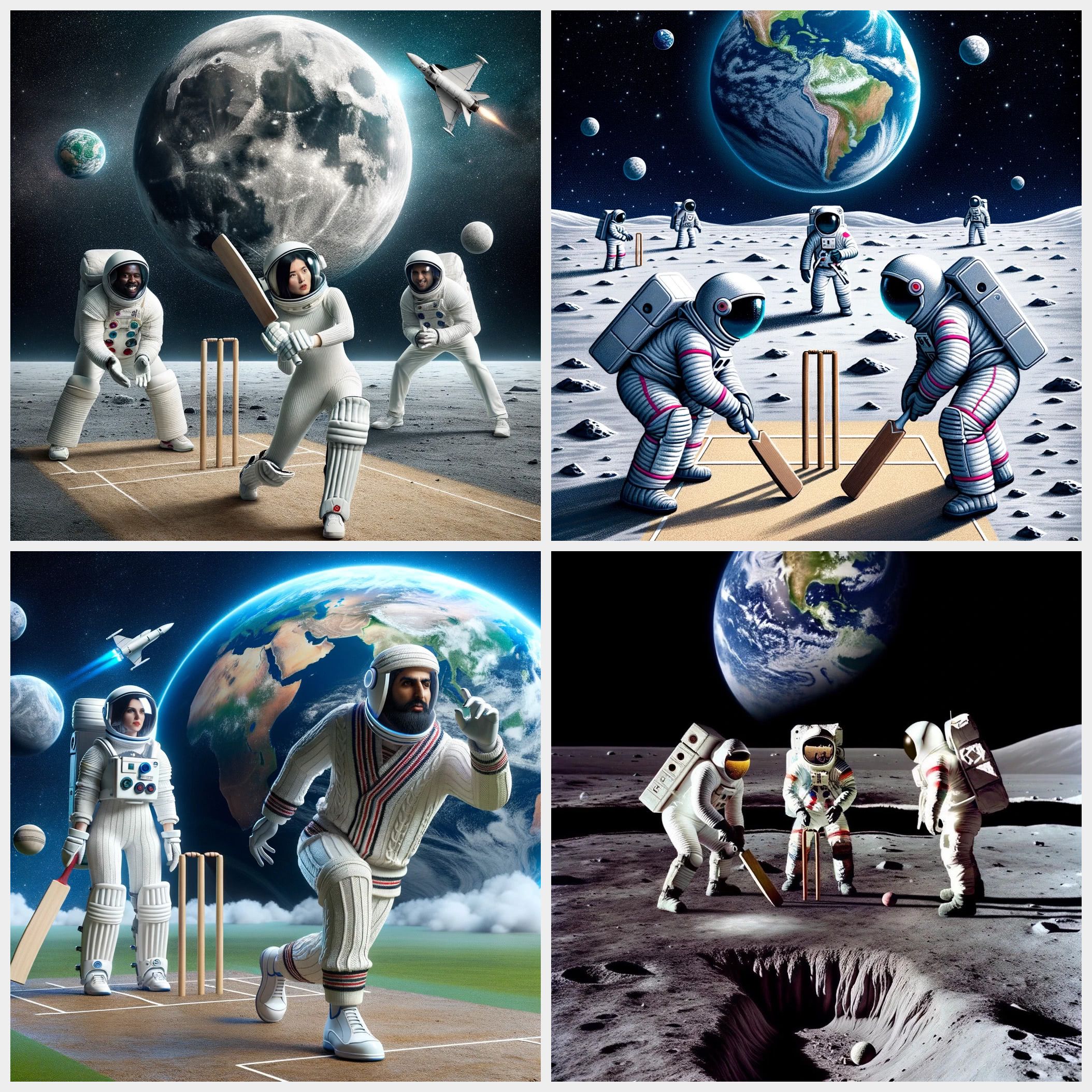 Cricket on moon with three slips and a gully?
…did not result in images of astronauts holding impossibly long bats bordering on polo sticks. Still, as impressive as the output is visually, it is a long way away from the cricket field setting the prompt describes. In the last image, a white cricket ball is seen lying in a crater - one wonders if they just chose a terrible spot for the pitch or if it was made by a bowler pitching with superhuman strength.
My final prompt gave results that also looked quite plausible:
Sachin Tendulkar playing a pull shot while riding an elephant in Mumbai
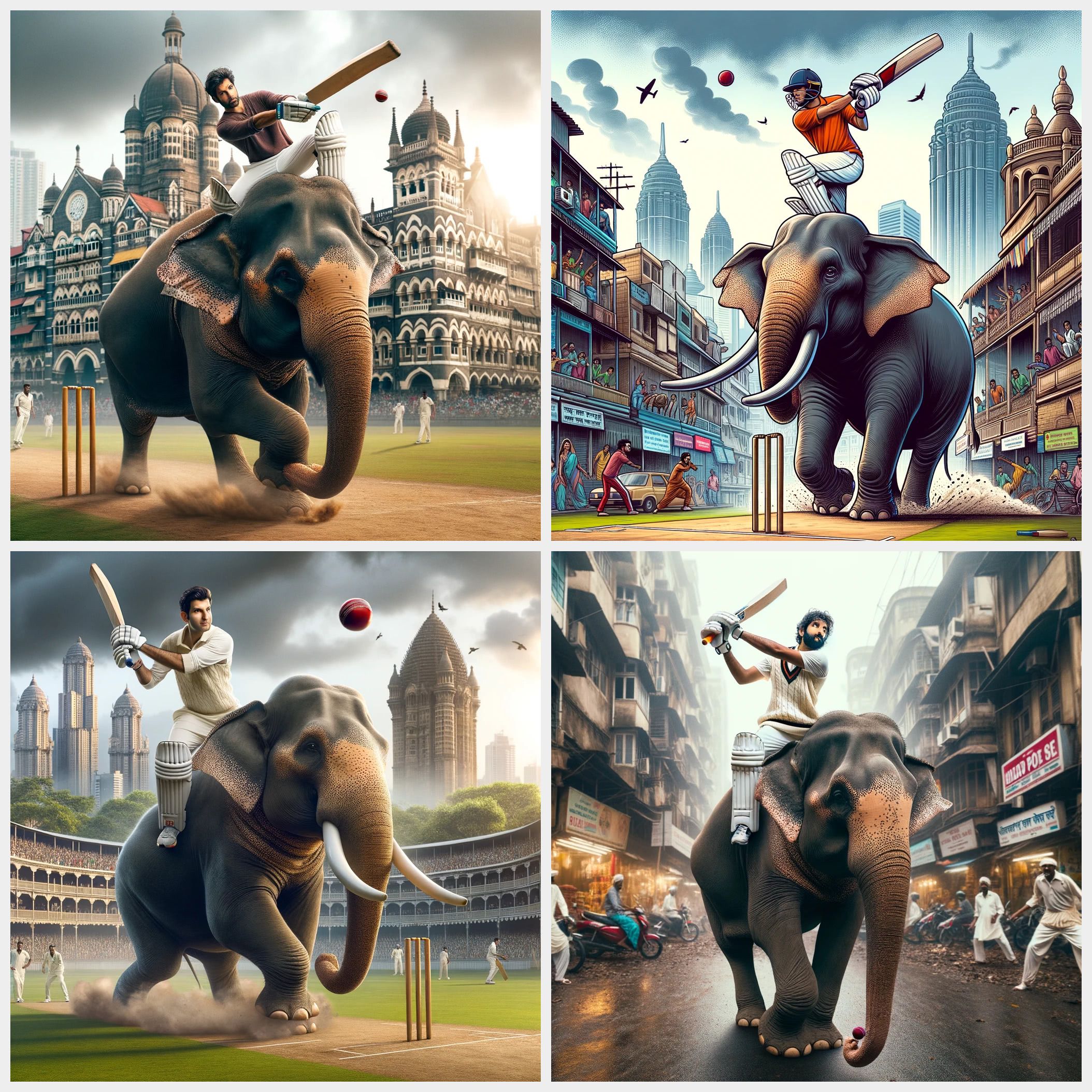 Sachin Tendulkar playing a pull shot while riding an elephant in Mumbai
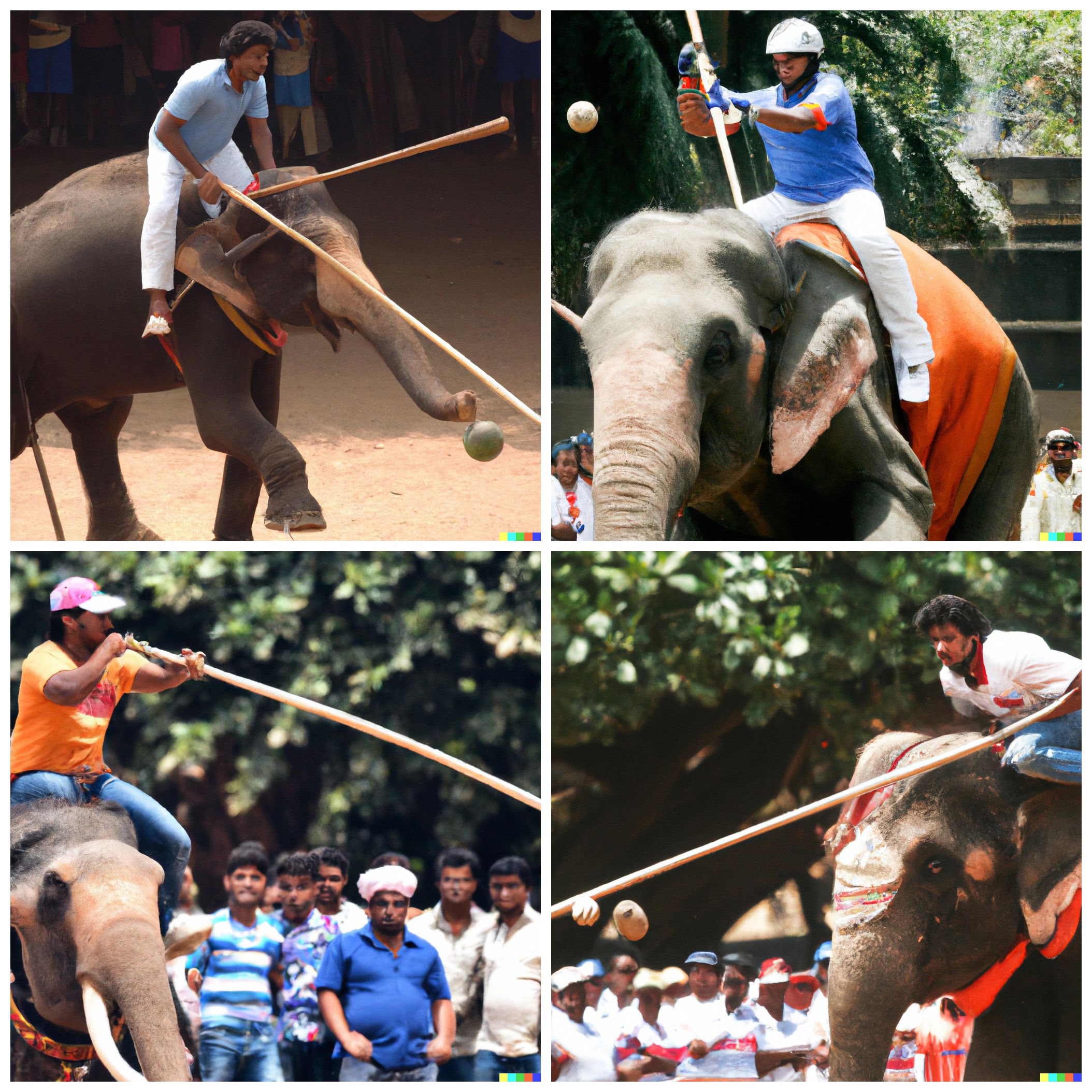
While I woundn’t mistake any of the players as Sachin Tendulkar, they definitely look like cricket players and not mahauts on tuskless elephants with polo sticks that DALL·E 2 had generated in 2022. More importantly, the backgrounds in all four images are quite evocative of Mumbai. Especially the building in the background of the first image - it looks like the facade of the iconic Taj Mahal Palace hotel.
And once you know that DALL·E rewrites yours prompts you can also ask it not to. You get four1 identical images but they adhere much more closely to your prompt’s intent. In my case, I finally got someone that might pass for Sachin Tendulakar from a distance.
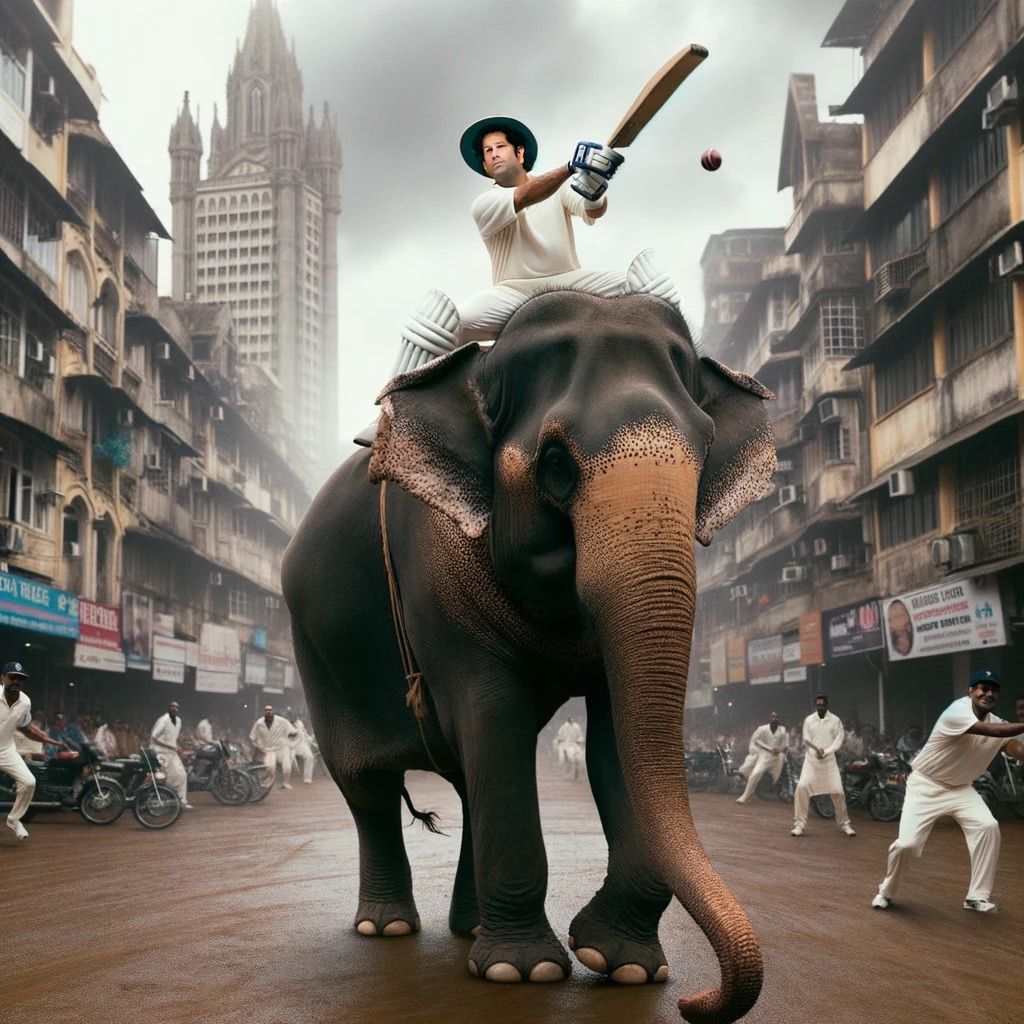 Sachin Tendulkar playing a pull shot while riding an elephant in Mumbai
At this rate, you could expect another post next year where I wonder what exactly had impressed me about these pictures by DALL·E 3.
Four images was the default images DALL·E 3 would render in response to a prompt when it had launched last year. Within a few weeks of the launch, they seem to have been reduced it to two - presumably to save GPU resources in the face of massive demand?↩︎
Bangalore Vignettes - Opera House
When I had moved to Bangalore in the early 2000s, The Opera House building at the end of Brigade Road (one that meets Residency Road), was already well past its prime. Like hundreds of other such colonial-era buildings in the city at the time, it was in disrepair and mired in lengthy legal disputes1. I must’ve thought that it would meet the inevitable fate that awaited buildings like these - to be torn down for a glass-concrete highrise with a mall and offices - because my 20-something self hasn’t seemed to have bothered to even take a proper picture of the building. The only picture of the building I have from my time in Bangalore is an accidental one. I was taking a picture of the decorative wooden cornice at a (now long closed) Chettinad restaurant on Residency Road for use in my blog’s header2 and a large part of the Opera House building happened to be in the background across the road.
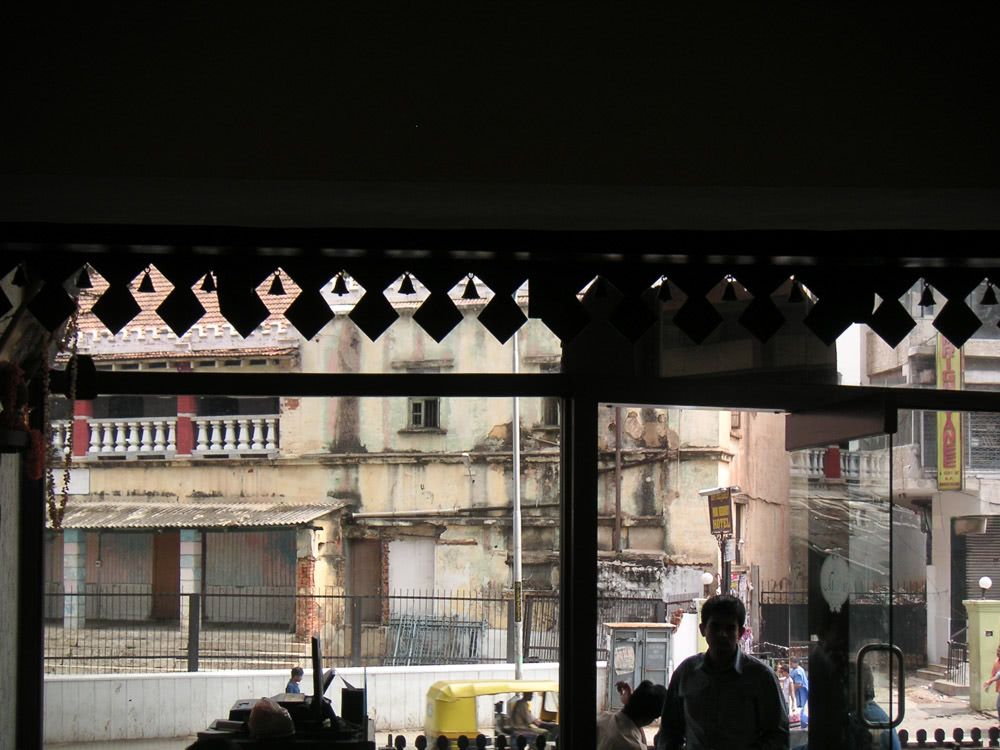 An accidental photo of the Bangalore Opera House taken in 2005
As you can probably tell from the picture, it was not in a good shape.
So it was a very pleasant surprise to return to Bangalore 11 years later and find this building fully restored. It was a little jarring to see it turned into a Samsung showroom and even branded as Samsung Opera House - but hey, if that’s what it took to save the historical building, I am not complaining.
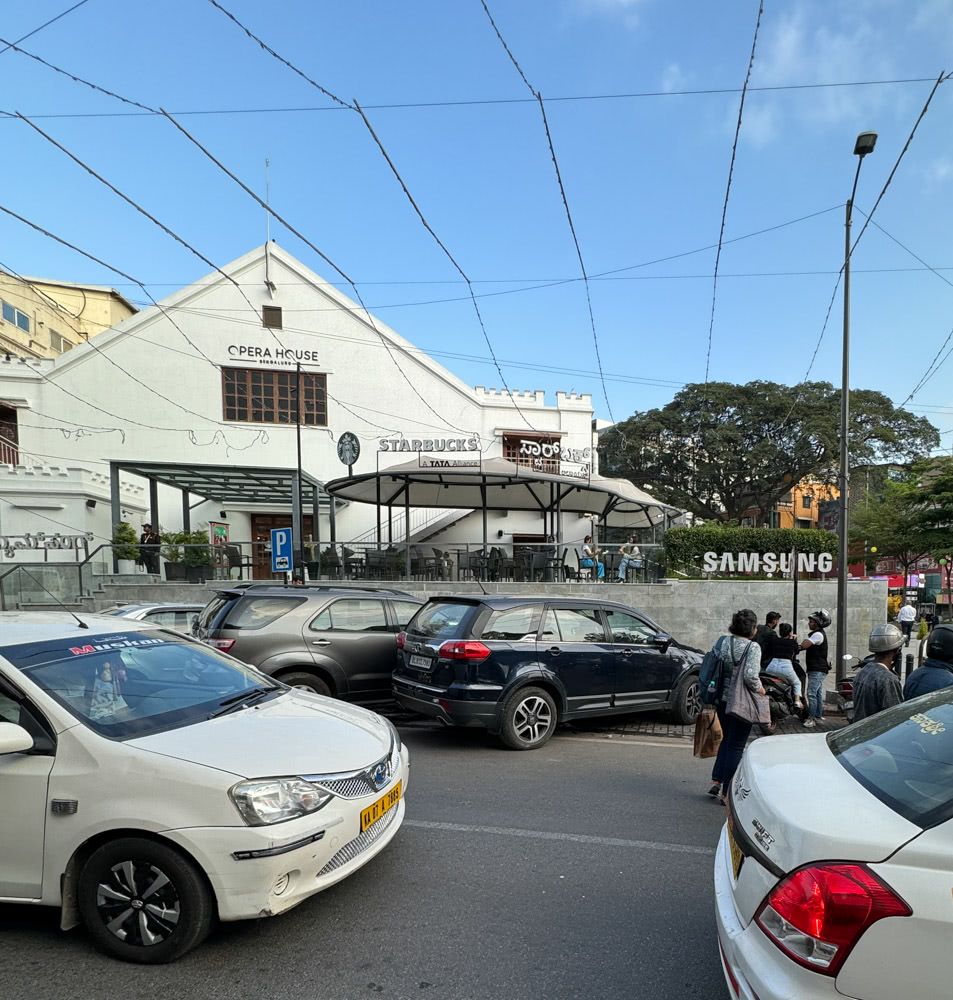 The restored Opera House building seen from Brigade Road
It also seemed like Samsung were being a good custodian. There was a small open courtyard outside, freely accessible to the general public.
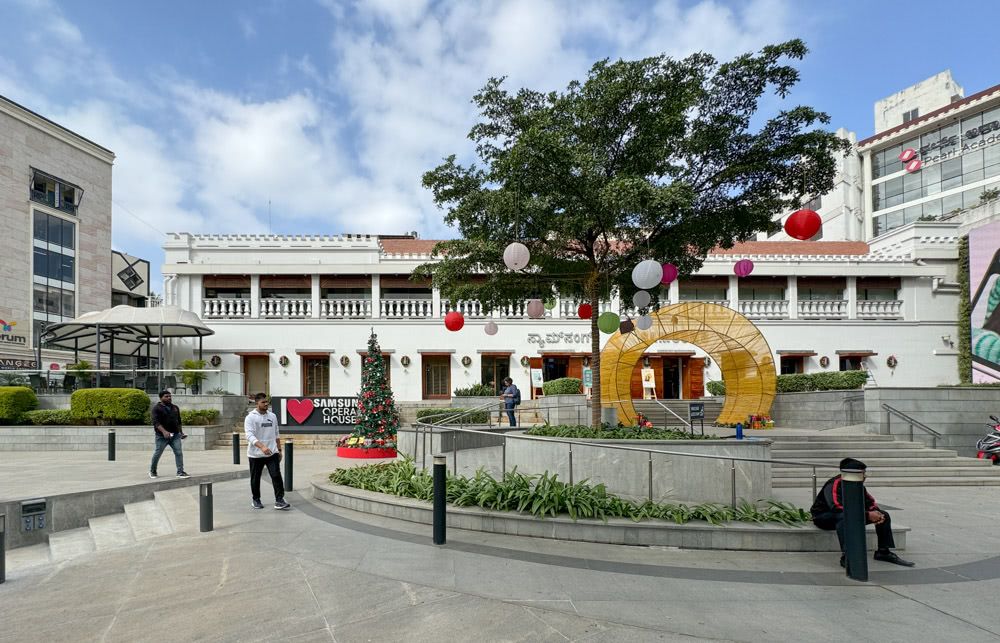 Samsung Opera House
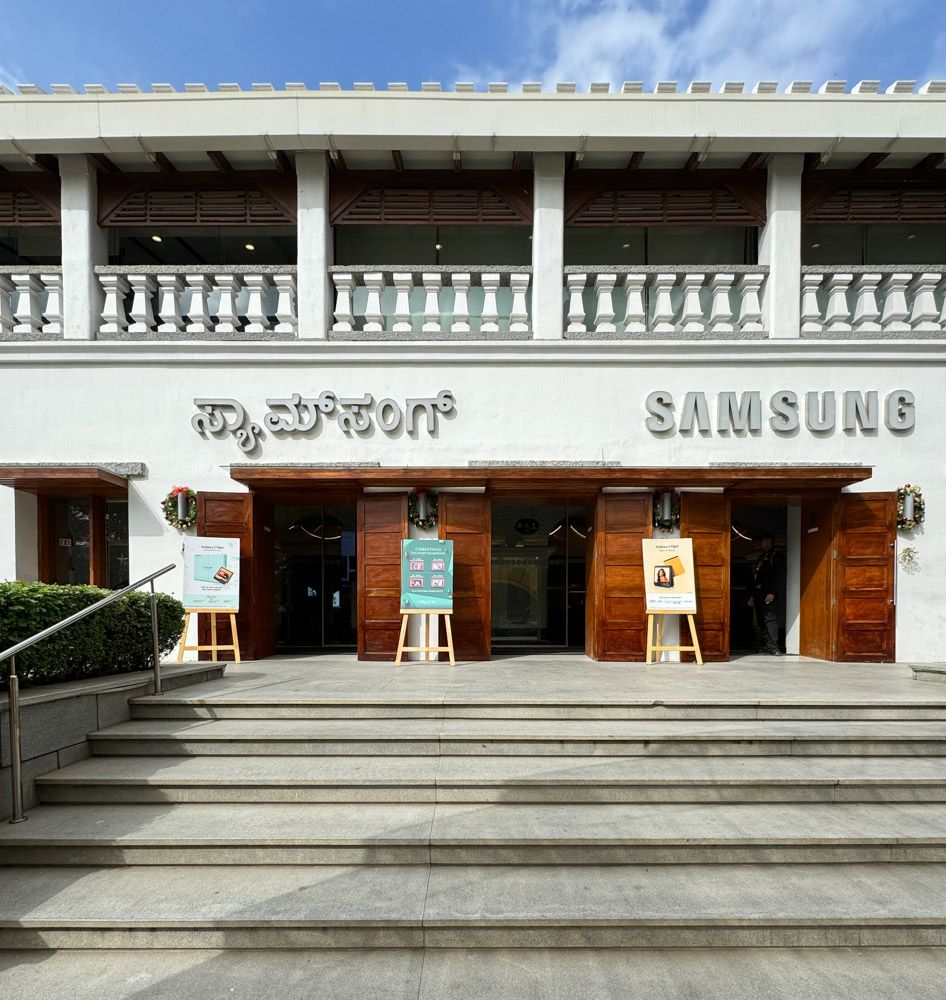 The entrance to the Samsung showroom inside the Opera House
One Friday evening, as we were walking past the building, we heard snatches of one of our favourite Bollywood songs through the din of traffic and incessant honking. A small musical concert was taking place in the courtyard3.
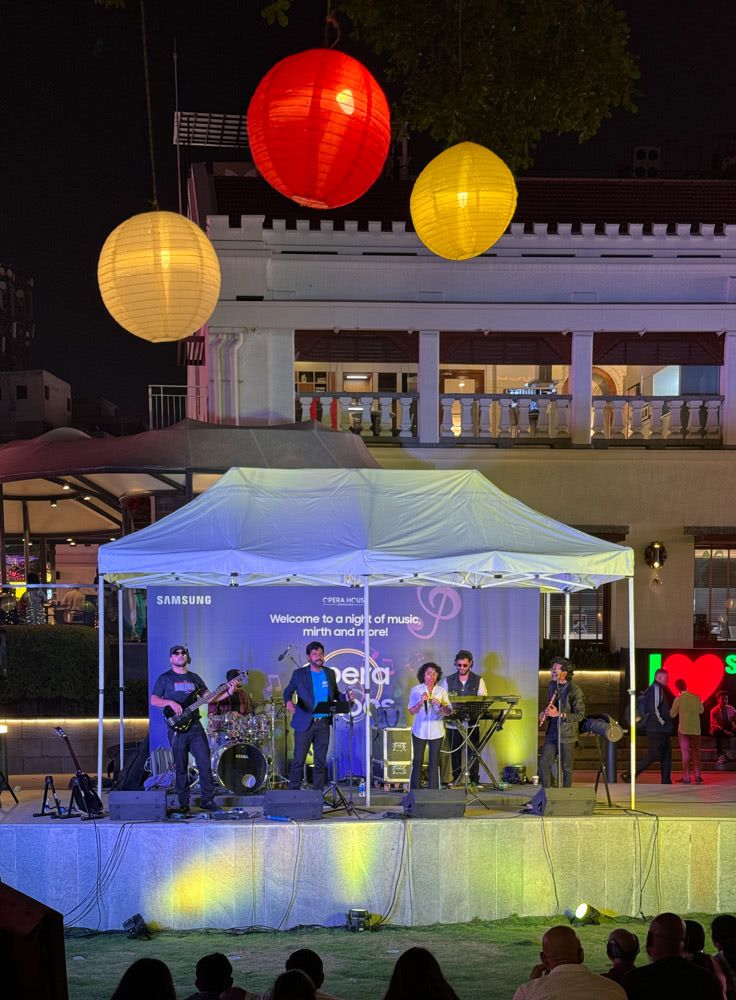 A musical performance outside the Samsung Opera House
As the short clip below will hopefully testify, not only were the performers talented, the speakers they were using did a good job of projecting the sound and masking the traffic noise. Somewhat.
We joined everyone else enjoying the music on that pleasant Bangalore evening and stayed for about twenty minutes. It is one of my fondest memories from this trip.
Back then I had assumed it was. While researching this post, I came across this Deccan Herald article that confirmed this.↩︎
Because that’s what 20 year olds did back then. Blogs with comments and our curated blogrolls were our generation’s social media.↩︎
Presumably paid for by Samsung!↩︎